"Major" changes are coming to Brooklyn's Gran Army Plaza Library with name changes to reflect the future and sponsorship
Do you know about the “Major” changes they are making to our libraries, perhaps particularly as exemplified by the changes in the works at Brooklyn’s last central destination the library, known up to this point in time as the Grand Army Plaza (“GAP”) Library? The changes being made are so extensive that everything is getting renamed. The library won’t be called a “library” anymore, but an “Information Center.” Inside, all the rooms will be renamed after a hedge funder acclaimed for creating value through corporate restructurings who may yet run again successfully for president.
But first, speaking of holding elected office, did you know that Brooklyn Public Library is making a big thing about its announcement via BPL president Linda Johnson that the GAP Library is being renamed after Major R. Owens a librarian who went on to become a prominent, revered black congressman representing Brooklyn. Major Owens died in 2013. That was that the year that the BPL announced that it was starting to sell shrink and sacrifice libraries for real estate deals, “the most valuable ones first,” like the Pacific Street Library next to Forest City Ratner’s Atlantic Yards and Brooklyn’s second-biggest library the central destination Brooklyn Height Library in Downtown Brooklyn also adjacent to Forest City Ratner's property.
The changes being made at the formerly named GAP Library and the plans to now name it after Major Owens are the reason that the New York Times just ran an article descriptive of many of the changes (In Brooklyn, Modernizing a Library for Downloads and Robots, by James Barron, March 25, 2018) that begins by recounting a dream Major Owens is said to have once had:
Major R. Owens once dreamed that an alien spaceship had landed and that the creature that clambered out told the first person it encountered, “Take me to your librarian.” When the alien was brought to the library [“information center”?], his human guide pointed up and said, “look up in the sky, it’s a librarian, it’s a robot, it’s a . . .
Why should a dream about librarian-seeking aliens and robots commence a New York Times article about the how libraries are changing? It may seem far out, but good explanations will come to those who wait.
First, let’s talk about the rest of the visionary renaming of the spaces within the library. Lest the Major Owens renaming seem too populist or bookish, other spaces in the library will be renamed for achievements that more customarily get recognition in our society. The 42nd Street Library has now been renamed by the NYPL the “Stephen A. Schwarzman Building” (or the sassy sounding “SASB” for short). Mr. Schwarzman, still very much alive, is for anyone who doesn’t know, the head of the Blackstone Group and now the first Corporate CEO to pull in an annual income exceeding $1 billion. Naming the “building” after Mr. Schwarzman is not only good for the burnishment of his brand, it inspires democracy by helping to encourage everyone else to follow in his footsteps in being alert for ways to achieve similar wealth . . . And so that they too may have their exploits chronicled by the likes of such famous authors as Jane Mayer.
The sassy SASB is the central jewel of the NYPL system. The renaming of the spaces at the BPL’s central jewel, spaces at the GAP Library will be in a similar vein and may help another recognized financial wizard to burnish his brand, which means perhaps also helping him politically in the future. The name change will also help the BPL get across what it has to offer and the message it intends to send to its clients.
The BPL is focused on how to repurpose its library spaces for the 21st Century and the 22nd Century. “We are looking to the future,” says BPL president Ms. Johnson hardly suppressing her glee as she borrows the Buzz Lightyear phrase to say that with our library information centers we are headed “To Infinity and Beyond!” What does this mean? It means the new repurposed spaces will all meet the standards of what is called in the new jargon for transforming libraries, “Makerspaces.”
Here is more to let you know how exciting information center makerspaces can be if they are for young adults (from the Young Adult Library Services Association):
Makerspaces, sometimes also referred to as hackerspaces, hackspaces, and fablabs are creative, DIY [“Do It Yourself”- exciting!] spaces where people can gather to create, invent, and learn. The focus, actually, is on the type of learning that goes on, not the stuff. Making is about learning that is: interest-driven and hands-on and often supported by peer-to-peer learning. This is often referred to as connected learning. Also, you don’t need a set space to facilitate this type of learning. You can have pop up makerspaces at various library branches, afterschool programs, community centers, etc. Or you can set up a ‘maker cart’ that can travel anywhere in the library. Perhaps what your teens need most are maker backpacks that are stuffed with resources and activities they can do at home.*
(* NOTE: "At home"- No expensive library space needed!)
Of course, makerspaces are flexiblespaces so they can be a lot of things, and they don’t have to be for the youth. They are also intended for adults. Going back a few years, the BPL has already converted much of its space at the future Major R. Owens Information Center (MROIC “pronounce it `More-ick’,” suggests BPL PR officer David Woloch) into conference rooms that can be used by “makers” starting new businesses or needing “gateways to technological tinkering” for their work.
“There was one problem with our makerspace efforts,” said Ms. Johnson, “but we have the solution now. The term `makerspace’ has been around far too long, since 2006 when we were first telling the public of big changes for our libraries. The term has lost its pizzazz. We like to keep mixing up the terminology so when we use so it always sounds fresh and convincing when we say we are doing future oriented things nobody has yet been able to conceptually grasp. `Makerspaces’ was the term back when we first introduced in alongside `STEM’ education. For excitement purposes we now often mix it up now by referring to `STEM’ a lot of the time to ‘STEAM’ education.”
Ms. Johnson then presented her big news: “We have a brand new name for these makerspaces, and we do mean `brand.’ We will now be calling them `Romney spaces.’ That is honor of Mitt Romney when he was a presidential candidate so memorably differentiating for us that our society is composed of `makers’ and ‘takers.’” Ms. Johnson continued on to say that they had further refined to term that would usually be used to clearly indicate that upscale clientele they hoped to attract to the spaces should have fun in them by calling the spaces: “Romney Romping Rooms.”
Ms. Johnson explained that affixing the Romney name to these spaces to highlight the maker/taker dichotomy would help her and the library in its mission a great deal. For instance, Johnson said that people often reacted negatively when articles like the one in the Times wrote sentences like “among many other things, the plan for the central library calls for replacing two levels of old-fashioned `stacks,’” Ms. Johnson said that if she could just more succinctly say they were doing away with all the “taker” spaces in the library she would get a better reaction. Henceforth all the space in the library not devoted to the Romney Romping Rooms will be designated and described as “taker” spaces.
Similarly, while doing a presentation for Open House New York the other day, architect Francine Houben, working for the NYPL to remove books from both the 42nd Street Central SASB library and the Mid-Manhattan Library (in a consolidating shrinkage) got flack for saying that “stacks” that could not be easily removed from the libraries and done away with at the whim of the trustees were “problematic.” Not surprisingly, the NYPL, in sync with the BPL and Queens Library, will also be dividing up their spaces into Romping Room spaces and “taker” spaces.
Much of the former GAP Library will be closed for many years to create the Romney Romping Rooms, but the BPL already has plans to ensure that they are a success when they open. The BPL will open them with a special overnight event. The BPL has already had several all night 7:00 PM to 7:00 AM nights of “Philosophy and Ideas.” Repeating this wonderful idea, the “makers” of Brooklyn will be invited to fill the Romney Romping Rooms for an all night inauguration.
Coverage of a previous BPL philosophy night when attendees were not required to walk the tightrope of Bain Capital's prescribed philosophy
“Previously, we didn’t steer the ideas under discussion so much,” said BPL spokesperson David Woloch, “but in honor of bequeathment of the Romney name we will provide a focus this time.” Mr. Woloch said that libraries are about “information,” and that being “a `maker’ in a DIY, pull-yourself-up-by-your-bootstraps society is about capitalism” so that putting the two together the focus for the evening would be virtues of “information capitalism.”
Click to enlarge
Mitt Romney’s own Bain Capital has been gathering together some of the suggested reading material. Included is a selection from John E. Buschman’s“Dismantling the Public Sphere- Situating and Sustaining Librarianship In the Age of the New Public Philosophy” where he summarizes an overview of thinking from Frank Webster setting forth what he sees as the tenets of “Information Capitalism.” Although what was presented was intended by both those authors to be a critique of “Information Capitalism,” the executives at Bain thought it was a spectacularly well put description of what they believed in and ought to promulgate. Those tenets were summarized as follows:
• The ability to pay is now a major criterion determining provision of high-quality information.
• Provision is made on the basis of private rather than public supply.
• Market criteria are the primary factors in deciding what is made available.
• Competition for funding (as opposed to a steady tax or tuition basis) is coming to be regarded as the appropriate mechanism for organizing the economics of librarianship.
• Commodification of information is the norm.
• Private information vs. public is favored.
Makers coming to spend the night to discuss “information capitalism” will be invited to bring and change into their pajamas. “We think this will help us corral a lot more young people,” says Woloch, “something that’s very important to us.” In addition, following its new principles the BPL now holds no events without partnering with private sector partners. In this case it will be partnering with Victoria's Secret and Flap Happy, another pajama manufacturer. Models from Victoria's Secret will stroll through the Romping Rooms modeling night lingerie, “which should certainly help with our young male attendance” says Woloch. The BPL is not breaking any new ground here: Britney Spears unveiled her new lingerie collection in the Celeste Bartos Forum of the NYPL’s sassy SASB in 2014.
In 2014 Britney Spears howed off her new lingerie (right) in the Celeste Bartos Forum of the NYPL’s sassy SASB (center) while the SASB stacks (left) were empty of books
Flap Happy will be donating free pajamas for those who don’t bring their own. What kind? Rompers with feet of course. The Rompers will have the Bain Capital Logo embroidered above a (not so vintage?) Romney presidential campaign buttons. Bain is also partnering in the event and Flap Happy is one of the companies, now manufacturing in China, that has been through a Bain restructuring that stripped out excess value.
“We expect we may start implementing modest charges to use the Romney Romping Rooms,” confessed Ms. Johnson. “Modest charges are a way of testing whether makers are really and truly real makers. . . plus it will serve to reduce the absurd cost and burden on society of maintaining libraries.” Ms. Johnson says the charges, the kind of thing that was previewed by the BPL when it was turning over library space free of charge to Spaceworks, a private company with good intentions like Bain, “does not mean that we are privatizing the space.”
“Our libraries have always been a public commons,” says Ms. Johnson, “but we are talking about ushering in the future and while the libraries continue as a commons in that future we understand that commons in terms of having evolved and kept pace with the future to become the neo-commons that makes sense today.”
The Times article about the changes in the library tells us that Congressman and former librarian Major Owens was always referred to the “Librarian in Congress” a play on the “Library of Congress.” The BPL’s David Woloch is frank when he is asked about why the library is being named after Major Owens:
Several reasons: There is the fact that Major Owens was black and we have to cover over and divert attention from how harmful what we are doing to the libraries is, most particularly to people of color and those who are not so very wealthy. Then there is the felicity of the name `Major.’ When you are consolidating and shrinkinglibraries it makes those libraries seem bigger if you can call them `Major.’ In fact, where we used to call this particular library the `central’ library, we are revising it to call it the system’s `major’ library, so it will be a `Major Major Library.’
“I know that’s sort of Hellerish thing to do,” Woloch told the Times reporter making sure reporter was “Catch 22ing” that he was making a “literary allusion.”
Chris Owens, son of Major Owens, a musician, singer-song-writer, politically active as a District Leader, former candidate for political office himself, and an activist who fought Atlantic Yards says he is not going to be fooled by the BPL naming anything after his father. He says:
Anyone who accepts what they are doing to the libraries by turning them into real estate deals and eliminating books with space conversions is getting `booby prizes.’ It’s unacceptable. My father was Democrat and nobody is going to allow his name to be wrapped around a bunch of Romney Romping Rooms named after a Republican looking to fleece the public. Now that the BPL has announced the intention to use my father’s name they’ve booby-trapped this for themselves because come time to cut ceremonial ribbons we will call them out on this.
Chris Owens went on to link it into the Atlantic Yards fight:
We fought Atlantic Yards and we fought Bruce Ratner. We know that the first two most valuable libraries the BPL wanted to sell, Pacific and Brooklyn Heights were both adjacent to Ratner’s Forest City sites. We know that the person who prioritized those libraries for the BPL’s sale came from Forest City Ratner. We are not going along with any of this cover-up.
So why did the Times begin its article about what the modernization of a library by recounting a dream about librarian-seeking aliens and robots? Why were “Robots” referred to in the Times headline for the article?
It was possible to refer to “Robots” in the headline because the article explained how the library makerspaces could now be used by makers to build robots. The BPL’s Woloch also bluntly explains there was another reason: “We asked the Times to put `robots’ in the title of their article. People were regularly Googling to find a Noticing New York article about how the BPL is on the cutting edge of introducing robot librarians to replace the real ones. Putting`robots’ in the title of the Times article helps divert attention when people are looking to find out how soon we might really be shifting to robots librarians.”
But to be fair, there is real talk about using library `Romping’ spaces for various sorts of robots to roam. Architect Francine Houben, working for the NYPL, has suggested that the new central atrium of the soon to be renovated Mid-Manhattan Library will be an excellent place to test fly robotic drones before procuring a license to fly them outside, especially if sight lines are improved by the oft suggested removal of bookstacks. Such robot drone flying includes test flying swarms of new nano-robotic bees.
New Mid-Manhattan atrium space- According to architect Architect Francine Houben a perfect place to fly drones, even better if the book stacks are removed as suggested.
Yes, it is possible to imagine a future where, when you visit a library, you will be met by a flying drone and, surprise, it will be your librarian ready to serve you. (Such flying robotic librarians would also solve surveillance challenges in keeping track of what patrons read.)
But why aliens? Does it seem creepy that everyone these days is suddenly always bringing up extraterrestrial aliens? Fox News, New York Magazine, Saturday Night Live, even on the front page of the New York Times? Is everyone having the same dream? Like in “Close Encounters of the Third Kind”?
Here is the creepy thing. The NYPL is selling the biggest science library in New York City (SIBL, the Science, Industry and Business Library) to the son of a librarian, a man who became wealthy beyond belief through his knowledge of science. The man leads a life like he is hell-bent desperate to be written into a James Bond novel, a feet of the world’s largest yachts, a fleet of vintage warplanes, building the largest airplane in the world, building a plane to go into space. His name is Paul Allen. Mr. Allen also had a sci-fi sort of dream that could relate to what a landing alien in the future might find if they land: A dying or threatened civilization that can only save itself t it can find the trove of knowledge it needs.
What, additionally, is Mr. Allen spending his money on now besides privately acquiring NYC’s biggest science library? He is spending muti-millions of dollars on trying to discover the extraterrestrial aliens out there! And now, just so you know, that is absolutely true, notwithstanding that this article has been an April Fool’s article written satirically for your amusement even as it riffs off far too much else that is unfortunately too, too true. (If you want to know how real such threats truly are to our libraries, go to Citizens Defending Libraries, of which I am a co-founder, and there you will find facts galore.)
Something more that is true: At the last Brooklyn Public Library trustees meeting on February 27, 2018, where trustees were given copies of the NYPL's the BPL's updated "strategic plan", the creatively titled (but hard to type) "Now➔ Next." At the same time, the trustees were told that a substantial portion of the Grand Army Plaza, Brooklyn’s biggest library would be closed for a long while the library is “modernized” and, as described by the Times, its stacks eliminated. What’s more, as was clear with what else the trustees were told the meeting there will be other libraries concurrently off-line: The central downtown Brooklyn Heights Library, once Brooklyn’s second biggest library and the only other central destination library is closed and now a hole in the ground as it is substantially shrunk, pushed more underground and its books largely eliminated as it is replaced by a supertall luxury tower (its Business, Career and Education Library has virtually disappeared), the Sunset Park Library will be shut down as it becomes a real estate project, construction will similarly put the Brower Park Library into the Children’s museum in another consolidating shrinkage, the Greenpoint Library too is getting `modernizing' construction. Creation of a DUMBO library as an experiment in teeny-weenyness was supposed to pick up some slack, but the trustees were told they haven't yet found the teeny-weeny space for it. This will be as Mid-Manhattan the city’s largest circulating library is closed for book-eliminating“modernization,” the 42nd Street Central Library where books have been eliminated undergoes work and, as mentioned, SIBL, the city’s largest science library is sold to Mr. Allen, its science library eliminated.
That said, in the spirit of April 1st let’s put just a few more last words in the mouth of BPL spokesperson David Woloch:
In today’s day and age of the internet, the inconvenience of temporarily closed libraries matters less and we’ve steadily removed a lot of the books from the shelves ahead of time in tests that proved our conclusion about this to be true. These extended concurrent closures of library space will also help people forget what libraries were in the past while letting them get used to not having libraries in the present so that in the 21st Century future people won’t even know what they are missing when we reopen our doors of those spaces we have, for the time being, still kept, to experience our fabulous Romney Romping Rooms. Besides, in the interim, we are partnering to send our library patrons off to city museums with a new “One-Pass” or "NYC culture Pass" Museum visit program. This is great because Museums are themselves partnering with profit making partners seeking attention with sensational blockbuster shows. Moreover, in the future, for greater efficiency and cost reduction we may further meld our infotainment institutions, so who knows what we will then be asking people to get used to or to do without.
For real: Linda John before the BPL trustees on February 27th ad they are told about a "culture pass" to send patrons to museums.
The Brooklyn Heights Library, Brooklyn's central destination library in Downtown Brooklyn. Recently expanded and fully upgraded it is two-stories (about 38,000 square feet) above ground and two half-floors with books at the ready underground
Major things are happening in New York’s City Council with a vote of the full Council expected December 16th. . . .
. . . Last month Brooklyn Public Library President Linda Johnson testified that the sale and shrinkage of Brooklyn’s downtown central destination library, the Brooklyn Heights Library, the second biggest library in Brooklyn, was being looked at as a model for deals being worked on by ALL THREE library systems in New York, the BPL, the NYPL and now the Queens Library.
This sweet deal for a developer who will build a luxury tower tucking in a drastically shrunken “replacement” library at the bottom, is far from a desirable model for the future of our libraries. And, the proposed sale of the Brooklyn Heights Library isn’t, actually, the original model for all this; the sale of the Donnell Library, conceived at the same time and executed first is the first prototype. The proposed sale of the Brooklyn Heights Library nonetheless charts an unprecedented course in that this is the first time the City Council must vote to approve such a transaction, a test of the council’s mettle.
The sudden, secretively arranged sale of Donnell was announced November of 2007. The five-story 97,000 square foot library standing on 53rd Street across from MoMA was sold at the height of the real estate bubble to net the New York Public Library probably less than $25 million. Between Fifth and Sixth avenues, Donnell was on what was documented to be the most valuable block in Manhattan. The 7,381 square foot penthouse in the 50-story luxury tower replacing it is on the market for $60 million. Other apartments in the building are selling for more than $20+ million.
We’ve just passed the 8th anniversary of Donnell’s sale announcement. The priorities here?: Last March, the luxury condominium tower, luxury hotel (for which Chinese investors paid a record-setting $130 million) and luxury restaurants were open, but the planned “replacement” for the library at the site, less than one-third size (28,000 square feet), mostly underground and largely bookless, is nowhere in sight. It’s new perpetually postponed completion date is now stated by the NYPL to be “Summer 2016.” . .
. . . While you continue to wait you can dine in one of the luxury restaurants seated on chairs upholstered with coyote pelts.
The beloved Donnell was a central destination library, much of it recently renovated with public money. It had a state-of-the-art media center and a new teen center.
The Brooklyn Heights Library is similarly a central destination library with a special focus on its Business, Career and Education division. Its location in Downtown Brooklyn at a key transit hub where it’s the most accessible library for a huge number of New Yorkers and Brooklynites. Its full upgrade in 1993 means it’s one of Brooklyn’s most up-to-date libraries and best in terms of computer support.
Even if the BPL proposed a full scale replacement library it would be a problem, because, stuck at the bottom of a privately owned residential building, the library could never thereafter be enlarged. This library was substantially enlarged when it was fully upgraded in 1993 so surely it’s a mistake to shrink it now, an uncorrectable one at that. This research library is one of the highest circulation libraries in the system, in the center of a fast growing business district, neighborhood, borough and city. Library use is up 40% programmatically and 59% in terms of circulation, most of that being physical books. The BPL plans to banish an untold number of books, only the merest fraction to remain.
The existing library is 63,000 square feet. Its proposed “replacement” was proposed to be a just over the 21,000 square feet specified in the developer’s contract. Pursuant to some backroom maneuvering to push the library sale though announced just last Thursday* it's now proposed to be a slightly larger shrunken library, 42% of the size of the current one. The existing library is about 38,000 feet above ground while its proposed “replacement” would have only 15,000 square feet above ground.
(* That backroom deal, with a lot of spending on the public's dime to push this deal through, not the developer's makes a major non-transparent raid on the budget of the Mayoral-controlled Department of Education.)
A second hugely awkward problem about considering a full-scale replacement: Selling the library for so little the BPL likely loses money. So far its it’s costing the NYPL $21 million and counting to outfit the library that’s supposed to replace Donnell. If it had to outfit a full-scale replacement it would have put the NYPL into an embarrassing hole.
Same thing with the proposed sale of the Brooklyn Heights Library. The library would cost $120+ million to replace, $60 million for the construction and, additionally, the land and the public’s associated right to use it are worth more than another $60 million.
But the BPL isn’t bothering to appraise the library’s current value to the public saying that attention only need be paid to a far lower figure, what a developer will pay for the “tear-down” value of the library. It’s like saying the value of a heirloom watch is just the puddle of gold it melts into. Interesting: The hearings have pretty well documented that the developer (not the high bidder), giving money to de Blasio, is not even paying that far lower “tear-down” figure. The BPL says the sale will net the city $40 million but appears intent on exaggerating the number.
Libraries, emblematically, are democratic institutions offering knowledge and opportunity to all. They also support our democracy by providing an informed, educated electorate. Happy coincidence: Libraries are good politics, because the public values its libraries, wanting their proper funding to be a top priority.
Will the City Council vote to approve this as a city-wide model for a retrenching program of future library sell-offs? That would be bad for our democracy and very bad politics for the City Council.
# # # #
The author, Michael D. D. White, a co-founder of Citizens Defending Libraries, is an attorney and urban planner who held a senior policy-level position and, for more than twenty-five years, worked for the state finance and development authorities.
For more about what has been written about the City Council's vote to inaugurate approval and sale of public libraries with this proto-type (including letetr of object written by the NYC Comptroller and Public Advocate) see:
PS (BONUS): Here is video about the decision where you can see:
1.) BPL President Linda Johnson saying that:
- This sale and shrinkage is a “model” for libraries throughout the city, not just future BPL transactions, but also for Queens and the NYPL
- Councilman Brad Lander (pushing for library sales and shrinkages like this one) is “very clever”
2.) NYPL president Tony Marx “Shushing” fellow library Johnson about saying that Lander is “very clever”
3.) Brad Lander saying about these library sale deals that developers “must make a profit.”
Linda Johnson speaking to her MAS audience about libraries as real estate- Pictures of the event are up on Flickr
I used to be a member of the Municipal Art Society. I used to routinely encourage others to become members as well. But now. . . .
I actually had a sort of extra-specially identification with the Municipal Art Society, a “born under the same star” thing. The Municipal Art Society, with a long venerable history, was given birth to“in the wake of the World's Columbian Exposition, when the Great White City in Chicago ushered in” a new era of expecting more and better for New York in terms of its urban design. Those are interests of mine. My father’s paternal grand parents, Mr and Mrs. Peter White, were key in establishing and running the Irish Village that was part of that same 1893 Columbian Exposition, and their coming to the United State to do so is how the White family arrived here from Ireland.
Mr. and Mrs. (Annie) Peter White and the Irish Village at the Colombian Exposition
I don’t know that this gives me greater or lesser rights to be irked with what the Municipal Arts Society has become, but , like many others, I am mightily riled. As it happens, a MAS board member told me ahead of time about the 180 degree turn around that for MAS that was intended. Not everyone has perceived it yet, but people are fast catching on to what’s happened: Once part of the fight against such abominations as Atlantic Yards, (“the poster child for what goes wrong when process is ignored. . . a poorly designed project that has polarized the community and that squanders both opportunity and public trust”), MAS now goes out of its way to give multiple bogus awards for such developer-driven blighting of the city.
MAS Puts Its Weight Behind Library Sales and Shrinkage- Somewhat Deceptively
The 63,000 square foot Brooklyn Heights central destination library in Downtown Brooklyn. The admired bas-relief murals are by C Spampintato.
At MAS’s February 26, 2015, Annual Members Meeting, MAS has continued to adulterate its its brand promoting, rather than holding to account, unbridled development, this time giving Brooklyn Public Library President Linda Johnson a platform to pitch unchallenged for another prize currently being eyed by the development community: sale and shrinkage of libraries to transform them into real estate deals. These deals benefit the developers they are handed out to, not the public.
As BPL President Linda Johnson spoke at the annual meeting MAS already had the Brooklyn Heights Library sale up and prominently featured on its website “Watchlist.” There the proposed sale was advertised, not accurately, but as a developer would probably prefer to have things described to stay low on the radar screen and sidestep public opprobrium.
• The description says that BPL is `partnering' with a developer to build a 20-story condo building on the site of the Brooklyn Heights Library.’ Was that correct? No, not really. Although something of a black box with the developer saying he is `starting from scratch' on the design and with no rendering furnished to the public showing all the available development rights being used, this building was last stated in the New York Time to be 38 stories tall, not “20-stories.” (The release of this non applicable but apparently very multi-purpose rendering accompanied earlier statements by the Times that the building was going to be 30 stories.)
• The description said this joint venture will provide BPL with a more modern library “on the ground floor.” It doesn't say that it will be a vastly shrunken library providing fewer functions, only 21,000 square feet (of which only 15,000 will be above ground- “on the ground floor” per the description) vs. the existing 63,000 square feet. The Business and Career functions of the library will be banished from it. Books will be exiled.
• The description said that the sale will provide the BPL with “an additional $40 million,” a figure only achieved by deliberately low-balling and not disclosing all the costs and public losses that need to be netted out. In actuality, in selling the library and shrinking down this $100+ million asset to one-third size to benefit the developer, the BPL is likely even losing money when all is considered.
• The description said that the money netted from the sale will be “put towards maintaining and restoring other libraries in the borough.” In actuality, the money from the sale goes to the city and there is no assurance that it would ever be returned to maintain and restore other libraries. The only obligation to do so would be a moral one, and since the city's current unprecedentedly low funding of the libraries is already immorally low there is no assurance such moral suasion would work. Quite the contrary, since the current low funding levels go back to the introduction of plans for low funding to justify such self-cannibalizing funding schemes, if low funding leads successfully to the sales that real estate industry salivates for there will actually be an inducement to continue such low funding level to provoke more such sales in the future.
Here is the complete language of the MAS-published pitch for the project:
Brooklyn Public Library BPL has partnered with Hudson Companies to build a 20-story condo building on the site of the current branch library at Cadman Plaza. This joint venture will provide BPL with a more modern library on the ground floor, as well as an additional $40 million to be put towards maintaining and restoring other libraries in the borough. This innovative project is part of broader trend of leveraging development to pay for civic assets.
BPL Linda Johnson Presumes When Speaking To the MAS Audience She Should Be Talking Real Estate
Johnson, in her calibrated pitch to the MAS meetings audience began, right off the bat, with an assumption that real estate was the most important part of what she was going speak to them about:
I am pleased to be here. I feel sometimes that I'm speaking more about real estate these days than I am about literacy, . . .
And was careful, continuing, to assure that other concerns were driving her focus on real estate (announced to her board as her top priority when she started at the BPL):
. . . but we need to actually address the real estate issues in order to deliver the services that the library is striving to do.
Attentive to the Fact That Size Matters
Ms. Johnson later similarly soothed the audience about how she cares about adequate library size when she explains that libraries built during the Lindsay era that are "on average 7500 square feet which is woefully small." Ms. Johnson doesn't tip her hand to the audience to say that one of contradictory priorities was to shrink such a "woefully small" 7500 square foot library in Red Hook down to just 5,000 square feet in a privatizing handing off 2000 square feet of the library to Spaceworks in a scheme that deserved and got a lot more scrutiny from the local community than Ms. Johnson wanted.
Ms. Johnson indicated that she is attentive to the concept that "because of the way neighborhoods have changed" there are "libraries that are over-served and under-served" as a result. That principle enunciated in the abstract may have lulled the her hearers when she got around to saying that she was going to be shrinking down to one-third size a key destination library, the downtown Brooklyn Heights Library in one of the fastest growing neighborhoods and business districts of the city's fasted growing borough.
A Plan For One Million Square Feet of Real Estate
Before she actually tells the gathering about the Brooklyn Heights library deal she acknowledges something ominous: That the BPL made a deal with the Bloomberg administration (now being carried out by the de Blasio administration) with respect to "over 1,000,000 square feet of real estate" used by the library ("It's actually owned by the city of New York The library is its custodian"). She says:
We said to the city if you give us this kind of money [capital funding], this kind of funding, we'll do our part as well. And we will do the best that we can to use the assets that have been entrusted to us to take care to take care of them, in other words, try and leverage the properties that we have to the full extent.
Of All Things To Tell a Municipal Art Society Audience!
Book ends?: Brooklyn's two central destination libraries, the Downtown
Brooklyn Heights Library and the Grand Army Plaza Library, were both
designed by the same famed architect, Francis Keally.
That's when she progresses to the subject of selling the Brooklyn Heights Library and progresses to an assertion quite ironic for her to state before an assembly of Municipal, Art Society patrons:
The Brooklyn Heights library which has been in the press a fair amount recently . . . was built in the early 1960s and it's an aging library that's no longer really doing the kind of job that it should be. There is nobody that I have heard yet who has argued that this is a building which is architecturally important or historically significant.
No one has argued that "this is a building which is architecturally important or historically significant"? The Library was designed by Francis Keally, who designed the borough's other esteemed central destination library at Grand Army Plaza. Francis Keally was also, in his time, the president of the Municipal Art Society. Keally was not only an admired architect; he fought for preservation of valuable, beautiful older buildings and their neighborhoods. As MAS president, he fought for the passage of the laws that eventually would protect them. Landmarks historian Anthony C. Wood writes in his 2008 book, "Preserving New York":
Francis Keally stressed that what was at stake "goes far beyond Washington Square and the Village." He asked his audiances to imagine a New York where a skyscraper had been substituted for the Church of the Ascension, or where the south side of Gramercy Square was built up "to smother the sky." Noting the loss of the Collegiate Church of St. Nicholas, he paints a picture of a New York where Trinity, St. Paul's, St. Bartholomew's, St. Patrick's, and St. Mark's-in-the-Bouwerie have all gone "the same way."
Keally's concern about building up on the "south side of Gramercy Square . . . to smother the sky" makes one think of Ms. Johnson's assertion that one good reason to tear down Keally's library to build a tower (perhaps 38 stories) that will loom over Brooklyn Heights from its edge is to "improve the skyline." When the first Landmarks Commission was appointed pursuant to the law that Keally had been instrumental in passing, Keally was on Mayor Wagner's nominating committee to suggest the appointments. The commission was appointed in 1962 the same year the library opened.
Ms.Johnson posing at the MAS event with Vin Cipolla, a successor as MAS president to Francis Keally, who helped usher in era of preservation. Cipolla that night gave Johnson a platform to advocate for the destruction of Keally's library.
Landmarks and Libraries
Contrary to Ms. Johnson's dismissiveness of Keally's architecture for the design of his second destination library in Brooklyn, both the New York Times and the New York Herald instantly pronounced the library as "handsome" when it opened, the Times saying it was a "clean-lined limestone building of two stories, with book sacks below ground" and the Herald describing it as "limestone-and-red granite."
The admired "sculptured figures at the glass-pannled entrance" are "the work of C Spampintato."
Further, although Ms. Johnson ventured to quickly tell the MAS assembly the building was not "historically significant," a good precaution if you suspected that any of the MAS old-timers might be around, behind the scenes the BPL had already engaged in measures to prevent the Landmarks Commission from recognizing as historic any libraries it wanted to transform into real estate projects and this library was a top such target on the BPL's and Johnson's list. According to BPL minutes from February 2009, in a rather frank acknowledgement that the system works in ways we often pretend it doesn't:
Landmarks informed BPL that they had completed their survey of our branches and found that we have 8 branches that are potentially eligible for designations as landmarks. The Committee [Capital Planning & Oversight Committee, co-chaired by Sharon L. Greenberger and Alice Fisher Rubin] recommended that in response to Landmark's request to prioritize these branches, the Library will respond that we are conducting a comprehensive analysis of our real estate portfolio and would like to wait on any decisions on landmarking individual sites until the Board has reviewed and approved the findings of the analysis.
Ms. Johnson, the BPL and Landmarks have been less than transparent about this. Citizens Defending Libraries (of which I am a co-founder) have requested via Freedom of Information (and basic transparency precepts) the communications between the BPL and Landmarks about these libraries: It is just one of many things the Johnson and the BPL have refused to make public.
A Sturdy Library With a History
The Keally library is 63,000 feet of extraordinarily serviceable (and adaptable) square feet. That includes two half-floors of underground space that, similar to the 42nd Street Central Reference Library, were set up to hold books for easy on-the-spot retrieval. Echoing the 42nd Street library, an “automatic conveyor belt” helped deliver books more efficiently. To say that the building is sturdy is an understatement: When it was built, it was built with space set aside for a bomb shelter with the thought that people could go there to be protected against a nuclear attack.
The air-conditioned building was built in 1962 (at a cost in today's dollars of about $20 million) and opened with a collection of 90,000 volumes. In 1991 (completion in October 1993) it was enlarged and upgraded (at a cost in today's dollars of about $10 million). Then, additionally, a reclamation of the space people once thought might be used as a bomb shelter added even more space for books. (The book count was 130,000 by 1992.)
The library was built intending to serve all of Brooklyn and, being the only library addressing certain business needs and functions (“the only library in the city” for such needs), was intended to draw patrons not only from all of Brooklyn but Manhattan, including lower Manhattan’s Wall Street right “across the river.” As well as accommodating staff according to earlier, kinder standards the BPL does not now want to meet, the building has rooms used as conference rooms and more rooms that could be similarly used. Its construction involved “special workrooms for business researchers,” including cubicles. Wanting to give the library over to development (secretly since about 2007) the BPL has not adapted or made these spaces available for the kinds of uses the public would likely appreciate.
When it opened, the library's “collection in depth” included books “dating from 1786.” In one irony- I'll explain below- one of the antecedent libraries that was combined to become this library opened “in 1823 with a wheelbarrow load of books” and when “General Lafayette laid the cornerstone of the building” Brooklyn resident Walt Whitman, a child then, “was present and was kissed by the general.”
To read more of the articles from which the above quotes come, see New York Times, Brooklyn Library, Open Today Is rich In Business Information, by Sanka Knox, June 1, 1962 and New York Herald Tribune, In handsome New Home- Brooklyn Business Library Opening, by William G. Wing, June 1, 1962.
Urban Renewal and Some Unfortunate Ironies
The 1962 library was built using urban renewal to lower the density of this area of Brooklyn Heights and the border of Downtown Brooklyn. That same urban renewal bull-dozing destroyed Walt Whitman’s print shop on Cranberry Street. What remains now is the vague attachment of a name, “Whitman Close,” to some urban renewal townhouses near that spot. While it's strange the way these untethered names can float away from history, there is another example: Johnson told her captive MAS listeners that by selling off the $100+ million* Keally library the BPL hoped to have just a few dollars to spend on other libraries in its system, naming as one of them, the “Walt Whitman Library,” less than a mile’s walk of about 15 minutes away.
(* Johnson told the audience that "The value of the property was not clear to us at the time, but through an RFP process we determined that it was worth over $50 million." The problem is that out of that $50 million the BPL is likely to net virtually nothing or less, and what price a developer will pay for the land in this kind of process in not representative of what the value of the buildingandthe land is to the public.)
This citing of other libraries that will supposedly benefit is a divide-and-conquer strategy on the part of the BPL as it tries to push through its destruction of the Keally library.
The “Walt Whitman Library,” which is near the Navy Yard serves those living in the surrounding projects who also regularly use the Brooklyn Heights Library to a very great extent. One of the insidious little secrets behind shrinking the Brooklyn Heights Library is that there are those who view the shrinkage as a way of making it a library just for the increasingly upper-crust Heights and disinviting visitors from other neighborhoods who are not desired. See: Tuesday, May 14, 2013, A Consideration of Race, Equality, Opportunity and Democracy As NYC Libraries Are Sold And The Library System Shrunk And Deliberately Underfunded.
Plan To Move On To Other Libraries
Part of the lack of transparency on the part of the BPL is its refusal to release the “strategic real estate” plan, the formulation of which involved hiring a former Forest City Ratner vice president, Karen Backus, who then prioritized for sale two libraries adjacent to Forest City Ratner property, the Pacific Branch and the Keally Brooklyn Heights Tillary Clinton Library. The plan deals with all the BPL real estate, which they say they want to “leverage”all of, but one thing its secrecy means is that, again in divide-and-conquer strategy, the public doesn’t know which libraries are next. Ms. Johnson frequently denies that there is a list of libraries to move down, the most valuable at the top. But she gave the MAS listeners (who probaly thought sale of the Keally library as she described sounded great) a clue that the BPL would be moving down the list, saying that the Heights Library sale and shrinkage is:
a model now that we are taking and looking at how we can tweak it to see if there are other examples in the borough which might benefit.
ULURP Starts Wednesday
She explained that the BPL was hopefully going to “get to ULURP soon” with the plan “in the works.” The start of ULURP is the commencement of process required for public review and to obtain approval if the library, owned by the city as public property, is to be sold and shrunk. She was speaking in February. ULURP (Uniform land use Review Procedure), likely an extended process, is now scheduled to begin for this proposal this Wednesday, the 17th. See:
Is there any extreme to development that MAS would still oppose? Some, maybe, it seems. In his presentation that night Justin Davidson asked about super-super tall towers: Who owns the sky?
Meanwhile, in discussions, forums and reports that Ms. Johnson has praised as consistent with her aims, the provision of new or better libraries has been described as bait, or `placation,' to induce communities to accept upzonings to accommodate development. Consider for example the Clinton Hill Library.
One plan to convert a library into a mixed-use development opportunity that was flushed out after I wrote about it here last August in Noticing New York is a plan for the Sunset Park Library. Ms. Johnson spoke specifically about it next. The BPL plans to make the Sunset Park Library. larger, in part because the community demanded it if there is to be any redevelopment. It is planning to make this library on the R Train line 20,600 square feet or bigger, close to the same 21,000 square feet that it wants to shrink the Brooklyn Heights Central Library down to.
I’d like to consider that this proposed larger size for the Sunset Park Library is also because of the sunlight and focus that Noticing New York and Citizens Defending Libraries brought to the process. As for what the original redevelopment plans for Sunset Parks were, going back to at least 2009, the BPL won’t release them indicating some embarrassment.
Libraries That Can't Grow With the City
Unfortunately, part of what the BPL is doing is saying, divide-and-conquer fashion, that the Sunset Park enlargement will theoretically be paid for out of selling the valuable central downtown Keally library. Also, unfortunately, like the Brooklyn Heights Library, the proposed new Sunset Park Library will be in the base of a residential building and can never be enlarged afterward. Involving long closures both libraries are susceptible to bait-and-switch with the BPL already probably underestimating the cost of building the Sunset Park Library.
The need for future growth is one reason why, if libraries are ever provided in the future as part of a multi-use development program, they should be in the base of commercial buildings where (unlike residential buildings) the city publicly owns more of the building for future expansion.
Population in Sunset Park has recently surged 19%. Upzonings were pushed through not long ago, but building to take advantage of it has largely not yet occurred. There are new city proposals, essentially additional upzonings, whereby buildings permitted to be 8-stories on Fourth and Seventh Avenues could become ten stories tall if certain kinds of units being considered are provided in the process.
Bows to Mayor's Development Deputy
MAS president Vin Cipolla and Deputy Mayor for Development Alicia Glen at the event
Also featured at the MAS annual meeting was Alicia Glen, late of Goldman Sachs, New York City’s Deputy Mayor for Development. Ms. Johnson made reference to Glen’s presence and how redevelopment libraries would be part of the mayor’s plan to provide “affordable” housing units. That’s a stated reason for the BPL’s redeveloping both the Sunset Park Library and the Heights Library for 50 units and 114 units respectively, the latter being done “poor door” fashion far away from fashionable, historic Brooklyn Heights. MAS president Vin Cipolla, interviewing Glen that night, similarly proclaimed that MAS was behind the mayor’s focus on full steam development to produce “affordable” units although many others worry about how Mayor de Blasio assured the Real Estate Board of New York that virtually all the rules could be thrown out to make developers happy in the process. That involves throwing out a lot of what MAS fought for in the past.
Ms. Johnson had many captive ears to hear her unchallenged pitch for why selling and shrinking libraries is good
Ms. Johnson concluded her address circling back to the real estate-not real estate theme with which she started:
So libraries are, in fact, not only about real estate, but also mostly about the people, about the great work that our libraries do inside the buildings, and about literacy as it relates to our communities in the way we work today.
Unchallenged, Ms. Johnson left the appreciably-sized MAS audience with a very skewed view of what she and the BPl are up to. Let’s hope that the MAS audience was far less gullible than Ms. Johnson would like to believe.
Addendum (added 6/18/2015): At the Wednesday, June 17, 2015 hearing referred to above, MAS sent a representative to testify in favor of this building (below- more images here) to replace and shrink the Brooklyn Heights Downtown Library made public in an information-dump, ULURP certification 48 hours before the hearing and being described as a 36-story tower in that information dump and the next day by the architect in the New York Times as a "38-story tower."
This Noticing New York post will do something unprecedented: I will turn over most of what you will be reading here to someone else's voice:the startling hearing testimony of researcher Donald Christensen. I doubt that you will be disappointed!
I'd like to think that, even if readers will be reading work authored by another, they will feel as if they they are reading one of Noticing New York's better articles. I hesitate to make that assertion because you might think I am trying to flatter myself: The insights, research upon which they are based, and the way everything is expressed in what you will be reading is superb.
State Assemblyman Kellner's Hearing on Sale of NYC Libraries
Above, Assembly Members Micah Kellner and Joan Millman listen to NYPL President Anthony Marx's testimony. Photo from Jonathan Barkey
Last Thursday, June 27, 2013, Assembly Member Micah Kellner, Chair of the Committee on Libraries and Education Technology, held a public hearing at 250 Broadway in Manhattan on the sale of New York City library buildings to private developers. The better part of what you be reading constituting this post is the stunning testimony delivered at that hearing by Donald Christensen, a professional researcher.
The hearing was very well attended with many of those attending testifying quite eloquently although some, like Mr. Christensen, set a very high bar. Citizens Defending Libraries and The Committee to Save the New York Public Library were among those testifying with a slew of others about the sell-off and shrinkage of libraries around the city, including the Central Library Plan, Donnell and libraries in Brooklyn. Testimony concerned the cost of these plans, the proposed destruction of the historic, irreplaceable assets, and how the plans donot benefit the public. The sell-offs resulting in shrinkage of the library system and assets owned by the public include destruction of the famed research stacks of the 42nd Street library on Fifth Avenue behind the lions, Patience and Fortitude. I personally testified as part of Citizens Defending Libraries of which I am a co-founder. Testimony from Citizens Defending Libraries, including mine, is available at CDL's web pages)
Overall, between 50 to 60 people signed up to testify. Though the room was filled to capacity (about 130 people were there) with every seat taken, not all of those who signed up to testify made it to the hearing and some who made it to the hearing to testify were not able to wait until the end of the day to deliver their testimony orally (though they were able to submit their testimony in writing): The hearing, scheduled for 10:30 AM, got underway before 11:00 AM and lasted until just after 6:00 PM. Other than the library heads, Anthony W. Marx, president of the New York Public Library, and Linda E. Johnson, president of the Brooklyn Public Library, nobody who spoke on Thursday spoke in favor of selling the libraries.
Press Coverage
Times story on Marx and the hearing
A most detailed account of the hearing from Susan Bernofsky can be found here: Friday, June 28, 2013, Saving the New York Public Library. Video of it is now up on the Assembly’s website where a transcript will also be supplied.
The best news for opponents of the library sales was that the Times coverage, by Robin Pogrebin and prominently featured in Friday’s main art section (see above), raises the hope that these issues are beginning to get the kind of coverage they deserve. Recently, Times reporter Joseph Berger worked mention of Citizens Defending Libraries (and accompanying link) into an updating story about the improved prospects for survival of the Pacific Branch library (Berger has also tracked the fate of libraries in an updating story about school sales were thwarted by community opposition). That mention was a helpful adjustment for the fact that reference to Citizens Defending Libraries had been removed from the earlier Times front page story about city libraries and schools being sold.
Ms. Progrebin’s latest article didn’t refer specifically to Citizens Defending Libraries but its theme was how NYPL president Marx has needed to retreat in the face of questions about why the NYPL was proceeding with an obviously very expensive Central Library Plan when it did not yet have a design or cost calculations. See: Critics Prompt New Review of Library Plan, June 27, 2013.
Landmark West! emailed the Times story picking out what may be its most telling line:
Mr. Kellner questioned, “If we don’t have a design yet and we don’t know cost, why has the N.Y.P.L. applied for and been granted building permits?”
The math in Marx's statements about how he was calculating that there was public benefit to the CLP also did not seem to work out unless one ignores and does not treat enormous taxpayer expenditures ($150 million) as being an expense. In my testimony, which followed President Marx's, I offered to comment on Mr. Marx's remarks but that didn't happen, given time constraints and the long list of those signed up to speak next.
Lack of Response By Library Officials to the Public
I would have pointed out that Mr. Marx said that the NYPL was listening and responding to public to make adjustments to its Central Library Plan, but that when Citizens Defending Libraries met with the NYPL's Chief Operating Officer, David Offensend, (May 30, 2013), we asked Offensend to describe in exactly what ways the NYPL has incorporated public feedback in updating its plans and the list he gave in a two and half minute response was sparse, although he also emphasized that the NYPL didn't have a "final design" and was "still working at it with the architects":
• The NYPL will "use more of the historic stack materials in the new design" to "memorialize what they look like"
• "People have expressed concern about how people will travel through the building" and accommodation of the larger number of people the NYPL has spent time "designing what the architects call the circulation, meaning how people move around and through the building" with "considerably more square footage open to the public. . so we are working hard on that"
• Signage and wayfinding, ways to improve the visitor experience.
• The NYPL, as of September, "agreed to a build out a portion of the Bryant Park stack to maintain many more books on site"
When we get to Mr. Christensen's testimony, remember the points above about the flow of pedestrians and crowds through the building and signage, wayfinding and visitor experience.
During his June 27th hearing testimony Marx also mentioned the accommodation to critics of building out the stacks under Bryant Park (this was actually the first of the items when Offensend `ticked' off his list). The problem was that at the same meeting where Offensend cited this as being a revision to the plan in response to public comment he contradicted himself with an earlier statement describing the build-out as being part of the original plan.
He said that the plan had begun by 2006, perhaps as early as 2005, and that in discussion there had been concern about the amount of space available. He said the NYPL hired the Gensler architectural firm, which was looking at the space issue and that the firm said, "The thing to do to create the right amount of space is to remove the
stacks, which is the main thing here, to create that much space." Offensend continued immediately (emphasis supplied):
And the librarians were like, well, `we'd have to figure out where to put the books.' And we did have that second level underneath Bryant Park, and we did calculate that, fully built out, it could accommodate about the same number of stacks that were in the stacks. So that was part of the original plan. The librarians were very excited about it because they said that nobody uses those books very much, anyway.
So was building out the stacks actually part of the original plan or one of the NYPL's very few ostensible responses to public feedback? I offer the above Offensend quotes without endorsement of whether I think the information stated in them is true, only to note the information given and the contradictions. The other problem with building out the supplemental stacks under Bryant Park now in order to accommodate more books is that use of those stacks was always, for decades, the plan to accommodate future growth and needs, not present ones. It was supposed to accommodate at least another ten years of future need. . . .
. . . One other thing that COO David Offensend conceded at our May 30th meeting with him was that if the NYPL's calculations about space needs were incorrect, or if with growth in the future the consolidated Central Libray Plan library needed to be expanded, there was no capacity to accommodate such expansion.
Had I continued my testimony at the hearing, I would have pointed out that the NYPL's lack of response to public reaction, together with Tony Marx's math that seems to assume that taxpayer dollars spent on the CLP don't have to be calculated as a cost in any cost benefit analysis, indicate a disdain for the public. Rather similarly, in Brooklyn, the Brooklyn Public Library does not wish to accept Citizens Defending Libraries as a representative of the public while the "Friends" of the library group has been given a lead role on the Brooklyn Heights Library "Community Advisory Committee" to represent the community even when that "Friends" group apparently believes it is never allowed to disagree or take issue with the BPL.
Elected Representatives Present at the Hearing
Testimony from all the following elected officials was all highly critical of the library real estate deals: City Council members Tish James and Steve Levin, State Senator Velmanette Montgomery, State Senator Bill Perkins (by his representative, Michael Henry Adams). Those Assembly Members asking the library heads for information, including Kellner and Millman, were also highly skeptical of the planned sales.
Reportedly Dejected Ms. Johnson After Hearing
BPL's Linda Johnson seemed to attempt a friendly conversation with Councilman Levin out by the elevators right before he went in to testify critically about the BPL’s sales. Word is that the BPL's Linda Johnson was morose and cranky as she rode down in the elevator leaving the hearing, complaining about all the opposition to her planned library sales. She was headed for a meeting of the BPL trustees later that evening. There at that 5:30 PM meeting she was greeted by community activists who held up signs about saving the Pacific Branch. They stayed for most of the trustees meeting, but, according to the reports I received, unless Ms. Johnson saved her remarks for the very end, she never acknowledged the activists present, nor told the trustees anything about that day’s hearing.
Through To the Bitter End
While the Times picked out the testimony of Edmund Morris, the Pulitzer Prize and National Book Award-winning writer and biographer of Theodore Roosevelt, who testified early in the day, as being of exceptional interest, as indeed it was, there was superb testimony throughout the day and you had to wait until the very end to hear some of the best of it, including Mr. Christensen’s.
Mr. Christensen was on one of the very last panels with former librarian Rita Bott who also provided some especially insightful testimony that I should perhaps publish in another follow-up. A coincidence: It turned out that, as a librarian, Ms. Bott had assisted Mr. Christiansen with research years ago but they had never formally met.
Because the testimony from Mr. Christensen that follows below is as long as it is I have not observed the usual Noticing New York convention of indenting to indicate that the text appearing is supplied by someone else. Also, to assist the reader with some "wayfinding" guideposts I have myself provided some subheading interjected between soem of the paragraphs.
Here then, without further ado, is the testimony (video available at CDL's YouTube Channel) Mr. Christensen presented.
TESTIMONY FOR COMMITTEE ON LIBRARIES AND EDUCATION TECHNOLOGY HEARING JUNE 27, 2013 PRESENTED BY DONALD CHRISTENSEN
Thank you for this opportunity to provide information I have concerning the topic of this public hearing. This hearing serves as a unique platform to create a public record of the facts, concerns and probable impact of the library's radical plans for reducing ready access to the library's resources for members of the public that the charter of the library promises to serve. Perhaps this public record will be reviewed by the people who are orchestrating this radical - and destructive - plan because until today there has been virtually no input allowed from anyone outside the small cadre of people intent on a singular agenda that has little to do with the goals that until recently guided this once-great institution.
Going Back In Time: The NYPL Standards For Serving The Public That Used To Apply
To prepare for today's testimony I read through the papers of the former Director of the library during the years of the formation of the Mid-Manhattan Library as it exists today at 40th Street and Fifth Avenue. His name was John Mackenzie Cory. He was on the staff of the library from the early 1950s until the late 1970s. All of his papers covering the transformation of the Mid-Manhattan building from the department store known as Arnold Constable are preserved in a large file box in the manuscript department of the Main Library building. That collection of papers includes all the correspondence, personal memos of everything from telephone conversations to notes gathered at lunch meetings, copies of internal reports from various Trustee committees, copies of legal interpretations concerning the Mid-Manhattan property as a real estate investment as well as various "white papers" and "confidential reports" that define the sequence of events and thoughts that show the path for the development of that facility. The records of Directors of the Library are sealed from public view for 20 years. That means we won't be able to access such records of the current director and those of the recent past to find out exactly what they have been up to for another 20 years, in which case it might be too late. But we have Mr. Cory's papers and they reveal a lot. I also had the opportunity to review the minutes of the Branch Library Council, which oversees a part of the actions of the branch libraries, including Mid-Manhattan, from the years 1949 through 2002. Those minutes and the other papers in the Branch Library Council file box at the manuscript department also reveal some interesting things.
While I went through these papers I took copious notes and had copies made of salient documents. Unfortunately, I cannot share with you copies of those documents. I have them with me, but I cannot copy them or quote from them for any type of publication (including the 20 copies of this testimony) without permission of the library. I have not been able to secure permissions. So I will have to paraphrase what I found in those papers.
There are two basic issues I'd like to cover today in the short amount of time I have. First, the goals and intentions of the Mid-Manhattan library as defined by the people of John Mckenzie Cory's era in comparison to what the current regime wants to deliver to the people of New York. Second, to look at the Mid-Manhattan property as piece of real estate. As everyone in this room knows, this whole current plan is really a real estate story, apparently designed to make someone really, really rich while impoverishing the cultural and intellectual texture of the city of New York.
Why Mid-Mahattan Was Developed And Serves The Public The Way That It Does
First, why Mid-Manhattan was developed. Since the late 1940s the Library wanted to move the small circulating facility out of the main building so that the main building could concentrate on the research aspect of the library that was the basis of its formation as opposed to the goals of the branch libraries. They first considered other ways of expanding the space within the main library. For example, there was a plan drawn up to tunnel under the terraces surrounding the building. That plan was scratched because they wanted a general circulating/general research library that was both visible and easily accessible. They did not want to hide it within the marble fortress of the Main Library. Also, they wanted a facility at a location nearby the main building. The idea was that if someone's research need was beyond the resources of a general research library, a patron could readily be sent to the main library and have their research needs handled immediately.
In 1961, the building housing the Arnold Constable department store came on the market. The department store did not own the building and never had. The store was just a tenant and in 1961 they had a lease that would not expire until 1979. Still, the library bought the building with the specific intention of taking over the building in 1979. The department store went out of business in 1975 and vacated the building. In 1967 the department store vacated the top three floors of the building and the first manifestation of the Mid Manhattan library branch opened on those top three floors in 1971. After the department store completely vacated the building, a series of recommendations were made about how to use the space. There was a lot of pressure to rent out the first floor for commercial use to get money to run the library. But a stronger faction within the library argued that such a thing would go against the goal of making the library fully visible from the street and readily accessible right off the sidewalk. To make it even more inviting they increased the size of the window on the façade of the building so that people could see in and see that it was a welcoming place to enter.
Another option that was rejected was the possibility of purchasing the Columbia University Club building on West 43rd Street, which was on the market for a time prior to the full expansion into Constable building. That option was rejected because the 43rd Street location was not visible enough.
After the commitment to the Mid-Manhattan along with its street level openness and easy accessibility, millions of visitors found that the concept has been very successful.
Accessibility and Burying Replacement Library Space Where The Research Stacks Now Exist
But now we are faced with a different idea. This idea strives to hide the general library deep in the bowels of a formidable building behind three massive walls of marble and far, far away from ready access from the street. This idea more closely matches the idea of burrowing under the terraces that an earlier - and wiser - generation of library leaders rejected as inappropriate for serving the general public. And how will this hidden facility welcome people into it or even let people know it is there? I doubt very much that they will put a sign over Stephen Schwarzman's name on the building to tell people what they might find inside.
As far as accessibility goes, this plan is a nightmare. I counted how many stairs and how many strides it would take to get to that location. Now, I might point out, it takes about 10 strides at the Mid-Manhattan library to get from the street into the actual library space - and it's on one level. In contrast, you have to climb 29 stairs and you have to take 62 strides to get from the sidewalk to the first door of the building's entrance. Then you have to take another 88 strides to get from the first door, traveling through two more doors to finally get to the top of Sir Norman Foster's flamboyant and vulgar staircase to look up at a seven-story high empty atrium and then climb down more stairs to reach the main level of the so-called library. It would take half a day to get to and from that space and only if you are in good shape.
(Added by NNY 7/4/'13) NYPL Architectural rendering of second and last of two similarly sized small doors that would lead to what was formerly the research stack space
But before you could get to Sir Norman's atrium, you would be forced to pass through one small door to get into what is now the Gottsman exhibition space and then through another small door at the other end of the Gottsman space before finally getting to Sir Norman's staircase when to begin your descent. Those two small doors supposedly are to serve both as the ingress and egress to and from the atrium space. At the Mid-Manhattan building, in contrast, there are three doors to enter and in different locations there are five doors to exit. And even then there are sometimes lines to get in or out. But Sir Norman's design doesn't take such traffic flow into consideration. Maybe Sir Norman doesn't know what it takes to get a million people a year in and out of a building space if there is only one door for both paths of action. The library has produced a video* that shows how easy it would be to get to the Sir Norman's atrium by seeming to show you floating through these little doors like Peter Pan with no other people around and no obstructions. In reality, it would more likely look like the army of cards in Alice in Wonderland slamming up against each other to get through the White Rabbit's little door. I can imagine that Sir Norman doesn't have to worry about crowds of ingress and egress when he visits the library building because I'm sure he is gestured in with: "After you, Sir Norman." When I look at the lack of doors to accommodate any reasonable type of ingress and egress flow of people, I notice that there are spaces at the rear wall of the Astor Hall that separates the Hall from the Gottesman Exhibition Hall that could be knocked out and more doors put in. Although the Astor Hall has an interior landmark status, I understand that the landmark definition does not extend to that back wall. I wonder if the current leaders of the library and Sir Norman would have any problem with knocking out portions of that wall - and vandalizing that space -- once they realize that people couldn't all get in and out of the single small door that is there now?
[* (Added by NNY 7/4/'13) There is a five minute NYPL produced video "A First Look at NYPL's Central Library Plan" that contains the Peter Pan fly through accelerated to finish in 30 seconds (just the 30 second fly through is available here: "NYPL's accelerated Peter Pan fly through a single door.") Viewers are cautioned that the film is very deceptive in it depiction of space and some other respects, something that Noticing New York will have to deal with in a subsequent post. The NYPL's also has a one-minute version of the fly through on its site titled "Explore NYPL's 42nd Street Renovation."]
Certainly, the distance from the sidewalk to Sir Norman's atrium would be an insurmountable expedition for a lot of people who currently use the Mid-Manhattan location with ease. And that doesn't even begin to address the needs of disabled people. Will people in wheelchairs be sent on an excursion to 42nd Street and up and down ramps and elevators instead of simply traveling directly off the street like they do now at Mid-Manhattan. Maybe the library could have Sir Norman design a sign to hang out front to express what they might really mean with this obstacle path for disabled people: "No cripples wanted."
(Added by NNY 7/4/'13) On left: Reality, light traffic through first door. On right: NYPL Architectural rendering of second door, and only entrance to the space meant to replace two large libraries - Is that couple conveniently diminutive?- Click to enlarge.
(Added by NNY 7/4/'13) What it looks like when more people use another of the library's similarly sized doors
(Added by NNY 7/4/'13) NYPL rendering from the inside showing the one small single door entrance.
Sir Norman's Vision?
In short, what we are getting here is the closure of a completely open democratic space and in its place we're getting a hard-to-get-to and hard-to-access area that's really designed to keep people out for elitist use by people who have the time to get there and the knowledge of where it's hidden. And let's be frank here, who could look at that huge atrium space and not see it for what it really is: A dramatic party room to be used occasionally by a handful of rich people. All fully equipped with a Sir Norman staircase to enter onto and sashay down so that party goers gathered below can admire the clothes of other rich people.
And, by the way, why couldn't the library leadership find an American architect? After all, the trustees of the original building were able to find American architects. But I guess it's less fun to say "I'm taking the B train to Union Square to meet with the architects" than to say "I have to go to London to meet with Sir Norman."
Lost, Inaccessible Library Materials (Including Materials On The NYPL Itself)
This whole Sir Norman dynamic sums up the elitist tone of this entire Central Plan. This new space isn't for the little people. It just another club room for today's moneyed oligarchs, their avatars and sycophants.
And to claim that the traditional use of the Main Library as a superb research center has been maintained even though most of the books have been moved elsewhere - like New Jersey - is a total lie. While I have used that research library for over 30 years, my recent experience shows exactly how wrong-headed and dangerous this method is proving to be. When you go to the main library, you don't know what materials are on-site or off-site. The on-line catalog accessible via the internet at home is of little help. You can try to order off-site materials via the internet, but the library cannot promise when the materials will be ready to be examined. In fact, if you ask for them to arrive on a certain date, you cannot ask whether or not they will be there until AFTER the date is passed! (See ATTACHMENT A.) In addition, because there is no librarian to assist you in navigating through the search process, you are often sent the wrong materials. Moreover, a lot of materials have already been lost. For example, I wanted to look at the New York Public Library's Annual Reports from 1958 through 1962 to see what was said about the purchase of the building that is today Mid-Manhattan. Well, those volumes have been lost. (See ATTACHMENT B.) I had to be sent to the Butler Library at Columbia University to look at them. (See ATTACHMENT C.) The New York Public Library has LOST the documents of their own history. Tragically, it's not too surprising since the current leadership of the library apparently has total contempt for the treasures in their care as they throw these materials up and down the New Jersey Turnpike in a cavalier fashion. I can report with confidence that the librarians working at the Main Library are completely frustrated with this nonsensical system that will guarantee further deterioration of the collection as it travels back and forth from storage in another state instead of just traveling up and down on small elevators from the stacks. And why? Again so that a few rich people can have another dramatic party room?
ATTACHMENT A- click to enlarge
ATTACHMENT B- click to enlarge
ATTACHMENT C- click to enlarge
Delving Into Real Estate Deal Aspects of Central Library Plan
The successful and ideal profile of the existing Mid-Manhattan building as fulfilling the goals of being a visible, accessible, democratically welcoming center located right on the street compared to the hidden, inaccessible, elitist nature of the proposed plan to move within the Main Building butts up against the reality of the real estate of the Mid-Manhattan building. This prime property is ripe for development. But who would get it? Who is poised to make the big money with its ownership? But more importantly, why should the library give it up since, obviously, they could never be able to recapture such real estate if the nature of libraries changes again at some time in the future. Plus, considering the library's past failures in successfully getting good prices for the real estate they have already sold, why should they be trusted not to throw this one away as well?
The unique placement of the Mid-Manhattan buidling finds it at the edge of the Bloomberg initative calling for the updating of buildings within what is called the East Midtown Rezoning Target Zone. Attached is a map of that area. (See ATTACHMENT D.) Shown on the map are shaded buildings that were built prior to 1961 and are particularly targeted for replacement with more modern and taller buildings. You will see on this map that the building directly adjacent to the Mid-Manhattan building to the east is one of those shaded buildings - 10 East 40th Street. The Mid-Manhattan building occupies 2-8 East 40th Street. The library building itself is NOT within the Target Zone, but, again, the adjoining property is.
ATTACHMENT D- click to enlarge
The Wohls
10 East 40th Street is owned by a group headed by real estate mogul Larry A. Wohl. Wohl's father and Wohl's father's partner Norman Levy bought 10 East 40th in the mid 70s. The two buildings - the library building and 10 East 40th - has a long and complex interwoven history that is too complicated to get into here. The two buildings were built by the same man - Frederick Vanderbilt - who owned them until death in 1938. There are aspects of the two buildings that overlap. Because of this interwoven connection, Norman Levy and Wohl's father were in constant contact with John Mackenzie Cory and other library executives over one matter or another affecting both buildings.
Then in the mid 1970s after the department store decided to vacate the building and before the commitment was made to fully develop the Mid-Manhattan branch, Levy and Wohl made a very generous offer to buy the building. This sent the library leaders to assess the situation seriously. They drew up an analysis of 6 options, including selling the building to Levy and Wohl. The library as well as the whole city was in dire financial straits at the time. But in the end the library leaders took the high road. They recognized that the building offered the best option for the goals they wanted to achieve to serve the needs of a general library. They turned down the purchase offer to follow the ideals of the institution - visibility and accessibility, no matter what the cost. Even though they didn't really have the money at the time.
Obviously, today if 10 East 40th could be a target for demolition and replacement with a super skyscraper, then a new building that could occupy both 10 East 40th and the Mid-Manhattan building site would make that super skyscraper even more super. I doubt that that observation has escaped Larry Wohl. And he has the money to do it. In addition, Mayor Bloomberg has apparently jumped on the "tear down the Mid-Manhattan building" bandwagon. Attached is an "agreement" from 2008 from the Mayor's office allowing the library to vacate the Mid-Manhattan building and sell it. This so-called "agreement" looks more like a commandment than an agreement, since no one from the library signed it. (See ATTACHMENT E.)
Has that observation of linking the two properties of Mid-Manhattan and 10 East 40 escaped the notice of the current leaders of the library? I doubt it. But, would they stick to the principles that their predecessors under the leadership of John Mackenzie Cory showed when they turned down an offer of ready cash from Wohl's father in order to fulfill the goals of the institution of reaching out to the users of the public library by having a space visible and easily accessible. Sadly, I doubt that as well.
They'd rather have the hidden Sir Norman party room kept pristine by keeping people out through three barriers of marble walls and time-consuming journeys to keep it available only to people with a lot of time and cut out such groups as lunchtime users who now run quickly in and out of Mid-Manhattan.
I don't know if Larry Wohl has maintained the type of constant contact with today's library leadership that his father and Norman Levy enjoyed with John Mackenzie Cory. We won't know for another 20 years when we will be able to examine the papers of Mr. Marx and his advisers.
Wohl's Writing On The Wall?
But the other day I got a little clue. Walking past the two buildings where they join on East 40th Street -I noticed that a large advertising sign for Mr. Wohl's leasing corporation, Joseph P. Day Realty, was announcing space for lease in 10 East 40th. The sign extends far into the side of the library building. (See ATTACHMENTS F and G.) This sign, in other words, encroaches on the library property, apparently with impunity. Is Mr. Wohl already assuming ownership of the library building? Are the leaders of the library already assuming that that will be the case?
ATTACHMENT F
ATTACHMENTS G
Is it much of a leap to imagine how much richer Wohl would become with control of that corner of real estate? And is it much of a leap to imagine how much less access the people of New York will have to library services as a result?
As the library continues to give away its real estate to make others rich, the losers are the people of New York.
* * * *
And that, dear friends of Noticing New York, is the startling testimony that was presented by professional researcher Donald Christensen at Micah Kellner's June 27, 2013 Assembly committee hearing about the sale of libraries in New York City.
Video is below or, best way to see it, available at CDL's YouTube Channel.
NOTICING NEW YORK & NATIONAL NOTICE are both independent entities managed by Michael D. D. White of Hop-Skip Enterprises. Michael D. D. White is an attorney, urban planner and former government public finance and development official. *** Noticing New York covers New York development and associated politics. National Notice covers national policy and economic issues *** Contact: MichaelDDWhite(at)gmail.com


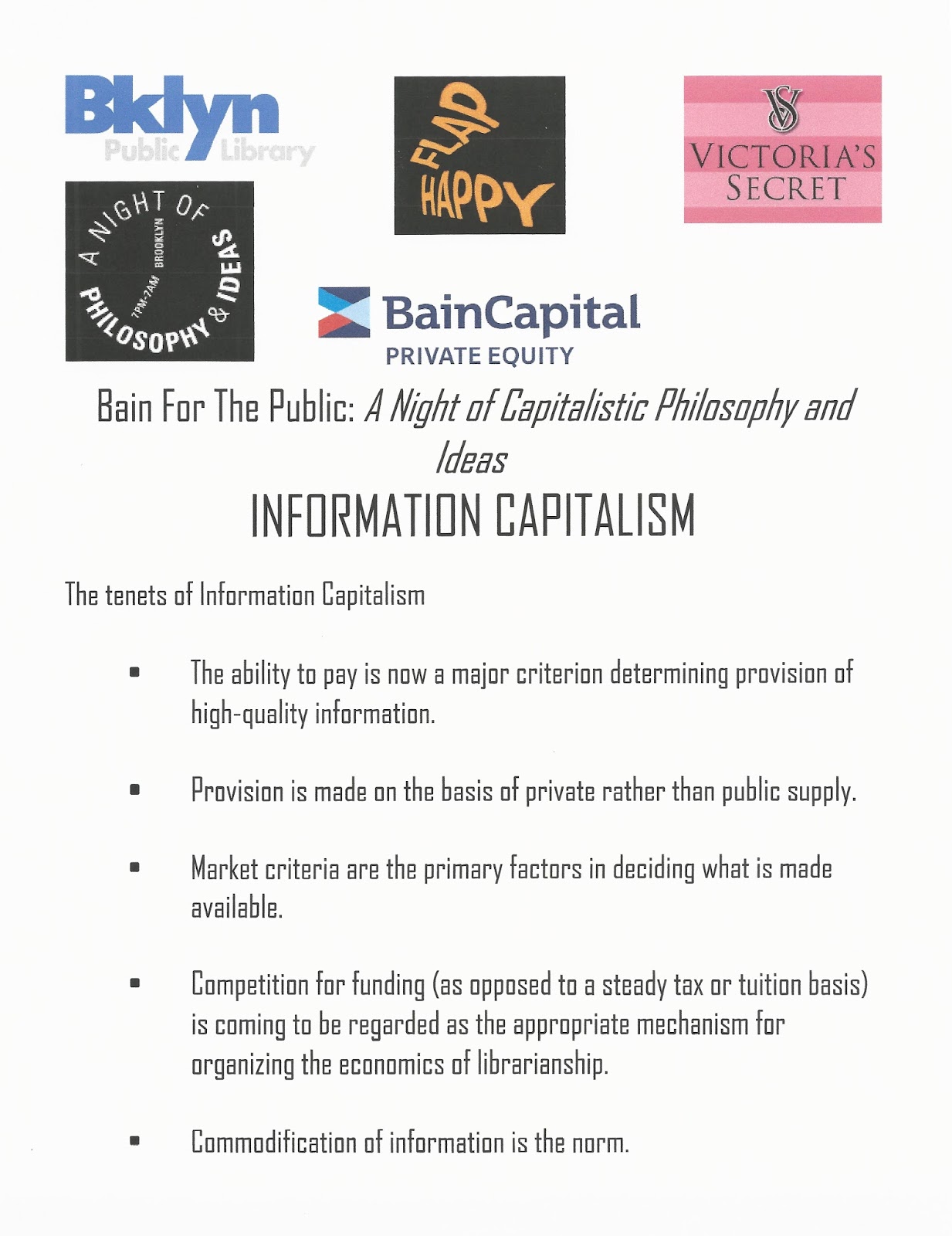


.JPG)


.jpg)
.jpg)
.jpg)
.jpg)
.jpg)