Saturday, June 15, 2013

SIBL, NYPL's Science, Industry and Business Library Sold At An Unreported Loss To The Public (And an Elucidating Sideways Look At The BAM South Library Real Estate Games)

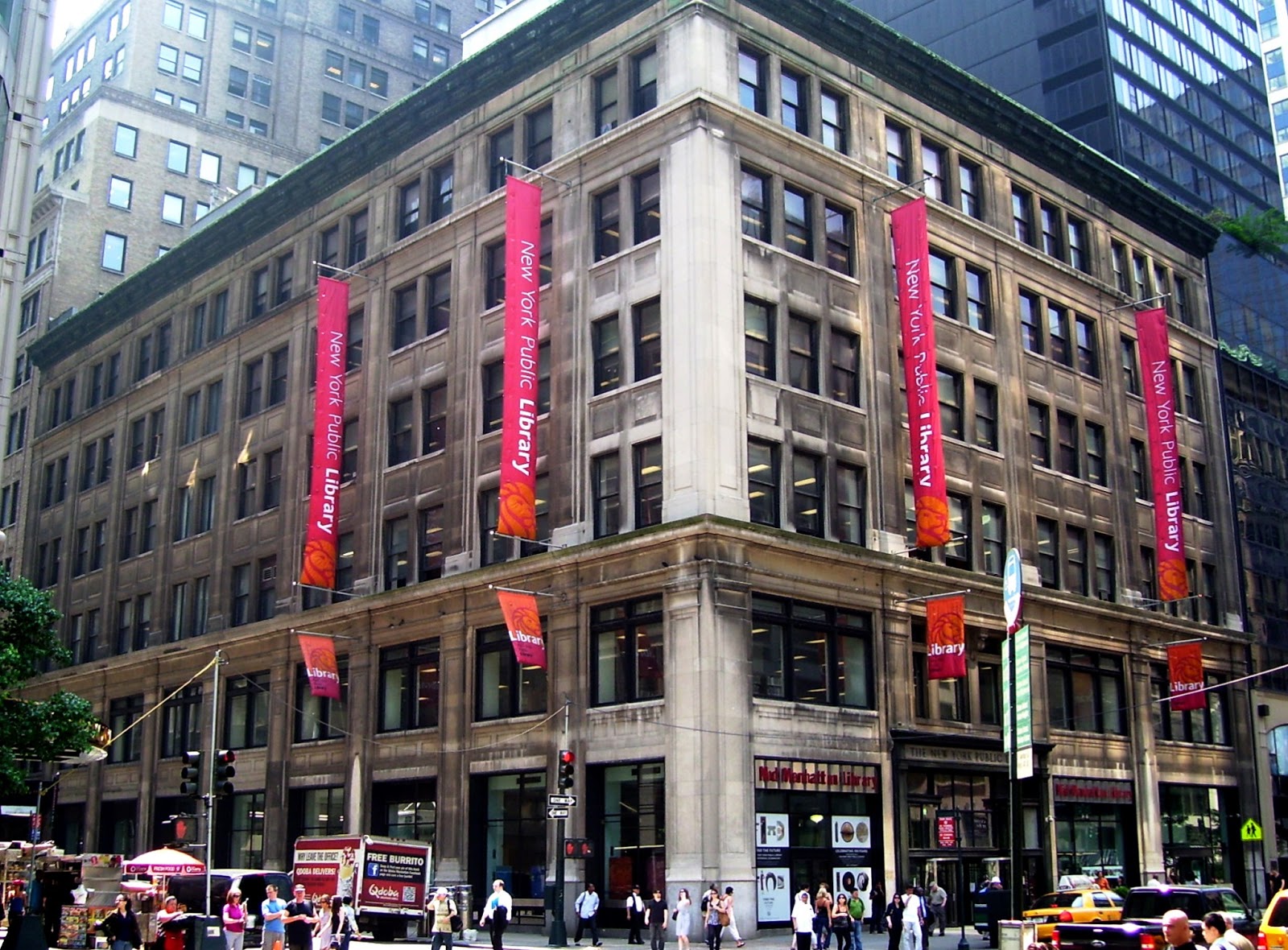
Science, Industry and Business Library (SIBL) in the former Altman building
Things don’t always go as planned.  Not even the mega-million dollar deals that the public expects are carefully considered as public resources, taxpayer dollars and public contributions are poured into major public improvements like libraries.

Did you know it ultimately cost the New York Public Library (NYPL) 25% more that it expected to build its new Science, Industry and Business Library (SIBL) when it bought part of the old B. Altman department store on Fifth Avenue?   When it had mostly raised funds for the project in late 1991 it expected it to cost $80 million not the $100 million it ultimately cost.

SIBL Space Now Sold Off Cheaply

Was the Science, Industry and Business Library building worth the $100 million it cost the public when it was finished in 1996?  At the time, the public and donors paying for the library were led to believe it was a spectacular achievement.  But there is some startlingly underreported news, again about how things don’t always play out according to described plans, and it casts doubt on the proposition that it was worth what it cost: Last summer, sixteen years after the completion of this $100 million investment that (at least five years in the works!), the NYPL sold off most of the SIBL library space at a very substantial loss.  See The Real Deal: Five floors of Madison Avenue offices nets $60.8M for the New York Public Library, June 22, 2012.)

The NYPL sold off five of SIBL’s six floors, 140,000 square feet or 87% of the library if you consider that square footage for SIBL is stated as an overall 160,000 square feet, for just $60.8 million.  That means that something on the order of at least $25.2 million of what was spent on SIBL went down the drain.  More went down the drain if you think in terms of inflation or what $100 million could have brought simply by being conservatively invested.  The Real Deal’s Reported:
The New York Public Library has sold five floors of a Madison Avenue building for $60.8 million, according to the New York Post. The third through seventh floors of the Science, Industry and Business Library at 188 Madison Avenue near East 34th Street was purchased by the Church Pension Group, which will use the space as its headquarters. The space comprises 140,000 square feet and only the fifth floor is currently occupied.
What might the library want to say to all its donors and the taxpayers whose huge $100 million investment has just been swept into the dustbin?

Should we simply ascribe the huge loss to the passage of time, thus being able to write it off?  To me, 1996 doesn’t seem that long ago: 1997, only a year later "The Lion King" premiered on Broadway, an event that seems fresh in my memory that led to Julie Taymor’s recent involvement with “Spider-Man: Turn Off the Dark.”

Besides, if you own real estate and, particularly if you are willing to wait a little while isn’t its value supposed to go up?  At the end of this article we will come back to the question of whether fair value is being received for the SIBL space being sold and at the same address a few mysteries.  They may be an explanation as to why SIBL would be sold off at less than its true value.

Larger Plans Afoot

SIBL was underway in 1991 when the real estate market was in a trough.  By contrast, 2012 was supposed to have been a pretty good year for NYC real estate and particularly commercial real estate in the Midtown South neighborhood where SIBL is located.  Why is the library being sold off at such a substantial loss?

The Real Deal article tells us:
The sale is part of the library’s four-year-old initiative to sell real estate and raise money for its $1 billion master renovation plan.
“$1 billion master renovation plan?”   Most people have only heard that getting rid of SIBL is part of NYPL’s Central Library Plan, a plan to take 380,000 square feet of library space and reduce it down to 80,000 square feet of library space by selling off the 160,000 square foot SIBL, together with the 139,000 square foot Mid-Manhattan Library and demolishing the 80,000 square feet of research stacks under the Central Reference Library at 42nd Street and Fifth Avenue and then putting squeezing what’s left of those two sold libraries in where the research stacks were removed.

The Central Library Plan has not been priced yet. . . It isn’t even fully designed yet and NYPL executives haven’t even decided what they might want in the way of having books in the new library but so far they have estimated, subject to increase, the cost of reducing this library space down from 380,000 to 80,000 square feet will be at least $350 million.  Largely because of Mayor Bloomberg’s specifications, New York City taxpayers will be paying at least $150 million of that cost.  But the $350 million plus figure does not include the losses that the NYPL is incurring by selling off SIBL at so low a price.  It should.

The New York Post “exclusive” from which The Real Deal story derived referred to the “master renovation plan” slightly differently and as going back to 2008: “The library announced in 2008 plans to sell some real-estate as part of a $1 billion master renovation plan.”   Does the Post think that NYPL plans to sell real estate unveiled in 2008 will involve that much NYPL real estate being sold off?

The Times apparently never reported the sale of SIBL or the substantial loss being incurred but approximately one month before the news of the sale appeared in the Post and the Real Deal, the Times, paving the way for it, published an editorial praising the Central Library Plan of which this sale would be a part: A Library for the Future, May 8, 2012.  (These Times articles from around the same time were more critical of the plan but not in terms of how library space was being wastefully sold off: Shh! Scholars Fight Over Library Plan, by Ginia Bellafante, June 8, 2012 and Public Library Head Faces Critics of Renovation Plan, by Robin Pogrebin, May 22, 2012 )

How We Paid For SIBL

Of the $100 million cost of the Science, Industry and Business Library, about half ($50 million) was paid for by charitable (tax-deductible) contributions made for the public's benefit and the rest was publicly financed by the city, the state, the federal government and even New Jersey indirectly had a hand in financing the library (the New York State contribution was delivered through the Port Authority of New York and New Jersey).  The exact contributions of the taxpayers through these respective governments changed somewhat as the project maneuvered through to completion under the guidance of New York State real estate developer and NYPL trustee Marshall Rose.  Mr. Rose was put in charge of the supervision of the entire real estate holdings of the NYPL by Vartan Gregorian, who became the NYPL’s president in 1981.  Mr. Rose has continued to handle the NYPL’s real estate ever since, even during a period of time that he was chairman of the NYPL’s trustees.

The Times reported the following breakdown with respect to the funding April 6, 1993:
    •    New York City has pledged $10 million
    •    The state $7.5 million
    •    Project officials are trying to raise $7 million from the federal government, although only $1.9 million has so far been secured.
    •    $25.5 million in long-term debt will be financed by bonds issued by the State Dormitory Authority.
    •    The largest single private contribution, $7.5 million, was made by Lewis and Dorothy Cullman.  (The 80,000-volume circulating library on the ground floor was to be named for them.)
The above is in line with previously reported figures (and figures reported afterward) except that in 1991 it was reported that there would be $55 million in tax-exempt bonds, probably issued by the Dormitory Authority.  Brooke Astor was another donor in the news.

Favorable Times Coverage For SIBL

Click to enlarge
From its announcement in 1991 all the way through at least 1997 the Times was full of nothing but praise for the new SIBL (see image above).  In late 1997 the NYPL Trustees announced that they “would rename the library's Electronic Information Center as the Elizabeth and Felix Rohatyn Science, Industry and Business Library.”  Elizabeth was departing after a short stint as Chairman of the Board of Trustees.  Did the trustees or the Rohatyns (off to France so that Felix could serve as ambassador) know how fast the sand was flowing out of the hour glass for SIBL making this honor ephemeral almost as soon as it was conferred?

Probably not.

The Times was reporting things like the following:
The most spectacular example of public-private enterprise is SIBL, the $100 million Science, Industry and Business Library that opened to great fanfare recently in Manhattan.
(See: Adopting Branch Libraries, July 15, 1996.)
The new $100 million library, which occupies roughly 160,000 square feet in the former B. Altman building, is the largest single project the library has undertaken since the construction of its landmark main building was completed in 1911. It unites all of the library's various collections of scientific, technological, mathematical and business material, which had been divided between 42d Street and the library's West Side annex, and places them in a new environment that is itself a showpiece of technology.
(See: Grandeur and Modernity in New Library, by Paul Goldberger, April 24, 1996.)

It was considered big.  In an editorial whose title alludes to SIBL’s proximity to Macy’s the New York Times praised the new library as follows:
The new outlet is the library's biggest single undertaking since the main Research Library, at Fifth Avenue and 42d Street, was built. The New York Public Library's president, Paul LeClerc, calls it the largest public-private collaboration of its kind -- not just in New York but anywhere.
(See: Miracle on Madison Avenue, May 11, 1996- The real estate industry has also sought to move Macy’s out of its building to turn it too into a real estate project.)

Interestingly, the Altman department store was built in 1906, just five years before the main research library.  The Mid-Manhattan Library was similarly created making use of a former department store, the building that housed Arnold Constable.
Mid-Manhattan Library, before there was scaffolding, the former Arnold Constable Department store
When Did We Suddenly Start Shrinking Libraries?

Was there an unforeseen turnaround, a sudden change in the concept of what libraries should be, the advent of digitalization such that abruptly, after only sixteen years, large libraries were no longer desirable and very small libraries are instead preferred?   Looking ahead in 1996 the prediction was against this:
"There is so much hype about electronic resources that if you allow yourself not to think about the future carefully, it's easy to believe it will be one without books," said William D. Walker, who is Andrew D. Mellon director of New York Public's five research libraries. "We're making an enormous investment in new space to hold future print collections. The book is an invention that will be difficult to bump by any technology."
(See: Moving Bits, Bytes and Books To the Library of the Future;A New Branch Offers Data in Old Forms and New, by Bruce Weber, April 5, 1996.)

In point of fact, public demand for physical books at the New York City libraries is up.

An Elucidating Digression Into Library Building and Real Estate Games In Brooklyn

The idea that significantly smaller libraries were suddenly to become the fashion would take some time to get around.  Until recently the real estate industry and developers saw libraries in a somewhat different light.

In 2002 the Brooklyn Public Library selected Enrique Norten of TEN Arquitectos in Mexico City to build a 150,000 square foot library across from the Brooklyn Academy of Music.  The library was seen in terms of bigger real estate ambitions, the “sleek, all-glass, Enrique Norten-designed building is a main feature of the city’s plan to surround the Brooklyn Academy of Music with a Lincoln-Center-style campus that includes new housing and cultural institutions.”   (See: Bruce to the rescue? Library courts Ratner for big cash infusion, by Ariella Cohen, September 2, 2006, The Brooklyn Paper)
Library New York Times, August 15, 2006
2005: Proposed theater shown next to library.
The price of the big Enrique Norten library went up over time (from $120 million to $135 million) and the envisioned date it would be built kept getting pushed back (ground wasn’t broken in 2005 and the building didn’t open in 2007).  But even though the proposed size of the big library was scaled back by about 40,000 square feet in 2004 (Library Project In Brooklyn Scaled Back, April 18, 2004) fund-raising for the library continued and the idea of a big library continued until 2007. (See: No Norten for BAM? 04/25/2007and Arts Library Planned in Brooklyn Hits a Snag, by Robin Pogrebin, May 3, 2007.)
    
2007, the year that this “big” Brooklyn Public Library project was abandoned was the same year that the Donnell Library sale-for-shrinkage deal was announced. That’s when the fashion swung from building big libraries to selling city libraries and shrinking them.

The idea of having an Enrique Norten-designed library across from BAM persisted, however.  It became  (or maybe remained a chess peice) in a game of real estate development manipulation.

The Times article announcing the demise of the plans for the big Enrique Norten-designed library contained this:
Plans now call for a new headquarters for Danspace Project, which commissions and presents contemporary choreography, to be built at Ashland Place and Fulton Street, with a 20-story residential tower on top. A formal request for proposals went out to developers in February, and responses are due on May 18. David Walentas, the developer behind much of the Dumbo area of Brooklyn, said he would submit a proposal.

Mr. Walentas said he would consider being part of a revised library project that would also include private uses. He declined to elaborate.
The above, with its reference to a request for proposals (“RFP”- a form of bid that is often used to get around the bids having to actually and truly be honestly competitive) totally obscures from the public what happened.  What happened should be a red flag for the public about what kind of improper real estate transactions are now being tolerated, nay intentionally structured, by library and city officials. . .

. .  The proposed library is now supposed to be included in the Walentas Two Trees Development BAM South project, but as became clear at City Council Land Use Committee hearings June 4th, Walentas got the right to build this property by bidding for city-owned property against nobody on an RFP for the right to build a “parking garage”: A “parking garage” (!!!), not the 300 units of housing now proposed to be built there together with the library and a great deal of other cultural space in a building that will be almost as tall as the Williamsburg Savings Bank building.
Presenting the BAM South Porject at June 4th City Council Hearing.  Image of BAM South alongside Williamsburg Savings Bank on screen, developer Jed Walentas on right
You can find an early report on the evolving status of this matter a year later in Brownstoner: Norten Design for BAM is Resurrected by Two Trees, by Gabby, 06/16/2008.  As of that time in 2008 the proposal was a “371,000-square-foot building with 180 units of housing and 187,000 square feet of commercial space.”  Later on, the project would grow to 300 residential units while promulgating the notion that the public should allow this still greater density in exchange for getting the library built.                 
Walentas project at 180 residential unit size- At the June 4th hearing the developer said the city directed him to use the architect
In 2008 it was not known that BPL also intended to sell the historic Pacific Branch library, the first Carnegie library opened in Brooklyn, as part of its plans in order to partially pay for the outfitting of the library in the huge new Walentas BAM South building.  The public would not find that out until January of 2013
The Walantas Two Trees development fully grown to 300 unit size from the "parking garage" RFP
The problem with not having a proper bid for city property is pointed out in one of the comments to the Brownstoner article from Shahn Andersen:
Am I the only person who has noticed that for a measly $26.5 million dollars, Two Trees is getting land that should be worth a around $65 million dollars? For the $20 million they are paying the city plus the lot worth $6.5 million they are transferring to BAM, they will be getting land with 371,000 buildable square feet. At an average market value of $150-$175 a square foot for a lot like this it would be worth $65 million dollars on the open market. Two Trees will be paying the equivalent of only $71 a buildable square foot for space that is predominantly valuable residential and commercial space.

Why doesn't the city ask for RFPs for this space, or open up it up to competitive bidding? The people getting short changed on this deal are us, the taxpayers. As mayor, Michael Bloomberg has sure pushed through a lot of projects that seem to benefit private developers more than the taxpayers.
I haven’t checked Shahn Andersen's calculations but the calculations were for when the project involved 180 residential units.  Increased to the 300 residential units now proposed the discrepancy between the benefit the developer is getting and what the developer is paying for it is far more extreme.

This is why City Council Member Tish James was entirely on target when, at that June 4th city council public hearing, she zeroed in with questions about the lack of public benefit the developer was delivering in building the project.  Among other things, the value being discarded by the city could surely fund city libraries instead of being being handed out as gifts to real estate developers.  Instead we find things are to the contrary, with the mind set library officials now have of selling off libraries to generate real estate deals; approving the BAM South projects stands to put the continued existence of the historic Pacific Branch Library in significant jeopardy.

Back to SIBL’s Sale

When all these real estate games are being played with library property it is important to ask whether proper value was obtained when the SIBL space was sold off.  Maybe not.  There are already significant and clear questions whether appropriate and full value was obtained when the Donnell Library was sold in 2007.  See: Monday, May 27, 2013, More Thoughts On Valuation And What The NYPL Should Have Received As Recompense For The Public When It Sold The Donnell Library.  It almost certainly wasn't.

Sale of the five-story 97,000 square foot Donnell netted the NYPL only $39 million while the 7,381 square foot penthouse in the 50-story building going up on its former site is being offered for $60 million.

It is hard to find comparables for and to judge what a vacant commercial condominium space like the SIBL space should sell for.  The price of commercial space is generally affected by leases.  If the property is affected by low-rent paying leases its value will be brought down.  High rent paying leases will bring the value up.  Low interest rates like we’ve had in recent years bring prices up, but for commercial space generally prevailing cap rates can also help keep prices down.  If the purchaser of vacant space is buying space to occupy the space themselves as was the case when SIBL’s space was sold to the  Episcopal Church’s Church Pension Group, prevailing high rents for leases in the city will tend to also drive up the price that will be paid for the commercial condominium property.

That being said as background, the sale of 140,000 square feet for $60.8 million comes to $434.29 per square foot.  Information available from one brokerage firm says that for 2011 the average sale price, per square foot for commercial space in an office building was $701 while “the first three months of 2013 average price per square foot for the purchase of an office building was $703.”

If you go back and watch a contemporaneous pertinent Stoler Report episode: The Stoler Report: “The Office Market in New York” June 8, 2012 (taped May 10, 2012) you will hear the real estate experts on that show describing the market back then as strong but taking a pause in its growth.  They also mention that the market was showing particular strength in Midtown South, the real estate area from the 30s to the teens between Fifth and Lexington where SIBL is located.  The Empire State building on the block next to SIBL’s gets cited.       
SIBL and Empire State Building in background
Then, as I mentioned before, there is the question of whether, with the escalation of real estate prices in general between 1991 and 2012, it makes sense that a loss was suffered.

What induced the Episcopal Church’s Church Pension Group to take the space?  The Real Deal article says that the Pension Group:
    . . . plans to sublease its existing offices at 437 and 445 Fifth Avenue upon moving into the Madison Avenue property.
That means that their existing lease was not up and that the deal they were offered on SIBL was good enough to induce them to incur the extra transaction costs of moving and subleasing.  Did they have a sublease clause allowing them to sublease?  At a higher rent?

The addresses the Episcopalian pension fund is vacating might point to an answer.  The addresses are right next to each other, but one of them, the 445 Fifth Avenue is next to, on the same block as, the Mid-Manhattan library that the NYPL is maneuvering to sell. Is this part of an endeavor to clear a larger real estate site for a truly massive building project?  And, if it is, can the New York Public Library legitimately be selling off a library like SIBL at a below-market price, at a loss to the NYPL, in order to promote that real estate deal?

That might be the an excellent place to end this article, but I won’t.

Let’s progress to one more mystery.  The State Dormitory Authority issued tax-exempt bonds to finance SIBL.  Why is it that when information about SIBL seems to have been furnished to the news media by the Dormitory Authority that SIBL’s space is reportedly cited as being larger?  More like 200,000 feet rather than the generally recited 160,000 square feet?

Rebuilding buildings doesn’t always make them safer.  Soon after SIBL opened there was a fire in the building that started in what were the fur vaults of the old Altman department store.  Reporting on that fire the Times reported:
The Science, Industry and Business Library of the New York Public Library occupies nearly 200,000 square feet on the eastern end of the building. Opened with great fanfare in early May and hailed as something of a technological marvel, the library serves 3,000 visitors a day.
(See: Fire on 34th Street Snarls Traffic and Shuts Library, by Janny Scott, August 24, 1996)

Similarly, this Times article reporting about Dormitory Authority financing uses a higher square foot figure:
The Dormitory Authority is also helping finance a $125 million project creating the Science, Industry and Business Library in 213,000 square feet on the lower eight floors of the Madison wing, scheduled to open later this year. CUNY's move, also authorized by state legislation and financed by public funds, will fill 375,000 square feet of Altman's remaining space, making CUNY the building's major occupant.
(See: Neighborhood Report: Midtown; Domino Real-Estate Deal Cleared, by Bruce Lambert, August 6, 1995.)

The answer may be hidden in this Times article about real estate lawyers.  It says that Gordon Davis, lawyer and former City Parks Commissioner (from 1978 to 1983) was working for the NYPL “which is looking for tenants to occupy expansion space in the new Science, Industry and Business Library at Madison Avenue and 34th Street.”  (See: Lawyers Who Mold The Shape of a City, by David  W. Dunlap, February 25, 1996.)

Did (or does) the NYPL own “expansion space” in SIBL, perhaps 40,000 to 53,000 square feet making up the difference between generally reported 160,000 square foot size of SIBL and these larger figures?  It raises many intriguing thoughts.  It also provides another place to end this article. . . .

. . . .  If the Central Library Plan goes through and what is left of the SIBL and Mid-Manhattan libraries are crammed, after demolition, into small space occupied by the research stacks of the Central Reference Library, there will be no `expansion space’ for the resulting much smaller library.

That should remind everyone of what is true of all the libraries around the city: Once they are sold off for these real estate deals it will be virtually impossible for the public to get them back.  (Even harder if they are sold off at below market prices.)

Saturday, June 8, 2013

Irony Of Ironies: Urban Librarians Unite, Holding A “We Will Not Be Shushed Read In June 8 & 9th! Sign Up Now!” Event, Wanted To “Shush” Citizens Defending Libraries About It.

Urban Librarian Unite is having a read-in event (publicized above) to protest the underfunding of libraries but they don't want you to come to it if you are opposed to the real estate deals selling off and shrinking the New York City library system
Urban Librarians Unite is having aWe Will Not Be Shushed Read-In June 8 & 9th! Sign Up Now! event inviting people to “take a stand against the outrageous proposed cuts to our beloved New York City public libraries.”

Citizens Defending Libraries has a petition that demands that “Mayor Bloomberg stop defunding New York libraries at a time of increasing public use, population growth and increased city wealth.”  The petition has well over 11,000 signatures, most of them online.  Citizens Defending Libraries (of which I am a co-founder) put the Urban Librarians Unite “We Will Not Be Shushed” event in the online calendar where it makes available all New York City library related events likely to be of interest to its petition signers and others.

And then Urban Librarians Unite wanted to “shush” Citizens Defending Libraries about its “We Will Not Be Shushed” event.  Why?  Because the Citizens Defending Libraries petition statement continues with the observation that “Shrinking our library system to create real estate deals for the wealthy at a time of cutbacks in education and escalating disparities in opportunity is not only unjust, it is a shortsighted plan that will ultimately hurt New York City’s economy and competitiveness.”
 
Notwithstanding that Urban Librarians Unite posted on the web that it was inviting “readers, library lovers, librarians, families, and even unsuspecting people just wandering by in front of the library” to participate and join “together to take a stand” against cuts that both organizations were formed to oppose Urban Librarians Unite demanded that Citizens Defending Libraries remove information about the public event about library funding from the calendar because Citizens Defending Libraries was opposing the real estate deals.

Urban Librarians Unite expressed dissatisfaction with the Citizens Defending Libraries testimony at Wednesday’s June 5th City Council Budget hearing where Citizens Defending Libraries called those real estate deals into question.  See: Testimony By Citizens Defending Libraries At June 5, 2013 City Council Committee Hearing On Library Budget Issues.

Here are some excepts from that CDL testimony:
City Council members will say that this underfunding is unjust and must be reversed.  Citizens Defending Libraries wholeheartedly concurs in calling for an end to such underfunding at a time of substantially increasing library use and city growth.

* * * *

On Monday, at the first portion of ths City Council committee hearing concerning budgeting for New York City Library budgets and library funding Anthony W. Marx and Linda Johnson, the respective heads of the New York Public Library and the Brooklyn Public Library, testified that they had a problem approaching donors asking that they give monies to fund the libraries because they cannot make a `credible’ case that any money given to the libraries by such donors will not be immediately subtracted out by the mayor of New York in budget cuts.  Indeed, supporting the observation that there are games being played that we must guard against and that are damaging to the public, Committee Chair James G. Van Bramer concluded with an acknowledgment that the annual budget dance around libraries is a `game.’
The testimony called for the City Council to intervene and investigate how city funds being supplied to the libraries were being plundered in these real estate deals.  As the city is providing the “lion’s share of all the funding for the libraries” Citizens Defending Libraries called for the City Council to seek the same assurance that big charitable donors insist upon to assure that their donated funds will not be “squandered or otherwise made meaningless.”  This made Urban Librarians Unite unhappy.

As much as Urban Librarians Unite sought to kerfuffle with Citizens Defending Libraries over the issue Citizens Defending Libraries did not agree to have Urban Librarians Unite dictate what should be included in its calendar items.  Instead, after much back and forth Citizens Defending Libraries accommodated Urban Librarians Unite by inserting notice of the following wish from Urban Librarians Unite, essentially a dis-invitation to the Urban Librarians Unite event directed to an important segment of the population:
•   Important Note Respecting One Of The Events In The Calendar Above-  The Jun 8 – 9, 2013 24-Hour Library Read-In by New Yorkers Standing Up for Libraries- Hosted by Urban Librarians Unite.  This is one of the events on the calendar not organized by Citizens Defending Libraries (most are not).   Urban Librarians Unite (created circa 2008) contacted Citizens Defending Libraries to express their wish that Citizens Defending Libraries communicate Urban Liberians Unite's wish that people not come to attend their 24-Hour Library Read-In event if they believe:
    •    We shouldn’t be selling off our NYC libraries the way we are.
    •    We shouldn’t be shrinking our library system assets
    •    It is a matter of public concern that we are getting less than appropriate value when these assets are sold, and/or
    •    Public representatives should assert themselves to protect these public assets.
Urban Librarians Unite also informed CDL that they considered inclusion of this publicly advertised (previously come-one-come-all event) public event in the calender “unacceptable.”  In other words they wanted to Shush us about their "We Will Not Be Shushed Read-In June 8 & 9th! Sign Up Now!" event.  Urban Librarians Unite objected to the testimony CDL delivered at the City Council budget hearing on June 5, 2013 and apparently there was concern on their part that people with negative feelings about library sales and shrinkage might participate in the event to express their opposition to underfunding of libraries, or that such people might communicate with attendees of the event about this related subject. CDL doe not allow those holding public events to dictate exclusion (or inclusions) of information in the calendar about relevant library-related events (mayoral forums, library trustee events, etc.), but agreed, in this instance, to express the above about ULU's conscientious efforts to exclude public opposition to the library sales and shrinkage from their message. 
The first communication coming from Urban Librarians Unite making the totalitarian demand that Citizens Defending Libraries remove from its calendar the event designed to capture "unsuspecting people" (library patrons) " just wandering by in front of the library” came in a phone call from an upset Lauren Comito, listed as on the board of Urban Librarians Unite. (We knew Ms. Comito from before because she had come to one of the first Citizens Defending Libraries organizational meetings.  Back then Ms. Comito expressed a desire to avoid the politics library underfunding, and subsequently our communications with Urban Librarians Unite dropped off.)

Ms. Comito expressed a concern that Citizens Defending Libraries was not calling for restoration of library funding.  Since her concern seemed to be expressed in earnest, even if it was a peculiar perception, (and evne though she hung up on us when talking) her concern seemed to deserve a response and I provided the one below:    
Lauren,

This was our testimony yesterday:
Citizens Defending Libraries wholeheartedly concurs in calling for an end to such underfunding at a time of substantially increasing library use and city growth.
See attached for the full letter.

So no, we are not in disagreement with Urban Librarians Unite that funding should be restored.  In fact, another point we make is that the given that the current funding crisis coincides exactly with the ginning up of these real estate deals to shrink the library system (including, as a result, staffing) we see the real estate deals and shrinkage as actually being a cause of the deliberate "unjust" underfunding, therefore another reason to fight them.  (One reason we are fighting for baseline funding.)

I don't know what you mean when you say you know what happened in the Donnell deal but I don't think it is was a good thing for the public.  [Ms. Comito had said on the phone that she was not naive and knew what happened at Donnell but did not elaborate about what she meant by this.]

With Donnell, the Central Library Plan and every library sell-off plan the details of which have actually seen the light of day, including the Brooklyn Heights library, there has been a consistent and substantial diminishment of the publicly owned assets (usually by 2/3rds to 3/4ths) with no benefit to the public while others are benefitting in nontransparent top-down concocted deals that, like Donnell, benefit connected players in the real estate industry.
    •    Donnell Library: Reduction of public library space by more than two-thirds (from 97,000 square feet to 28,000 square feet- NY Times figures, though by other calculation it is more extreme).  Library worth perhaps $120 million to the public in terms of continued ownership (based on recent transactions) is sold to net $39 million.

    •    Central Library Plan:  Reduction of public library space by more than two-thirds or about three-quarters (from 380,000 square feet down to 80,000 square feet- That’s the 139,000 sq/ft Mid-Manhattan plus the 160,000 sq/ft SIBL plus the 80,000 sq/ft of stacks being destroyed.  In the very recent past, before the real estate guys took over it was proposed to nearly double Mid-Manhattan’s space, increasing it by 117,000 square feet for more library services) The cost of this 380,000 square foot shrinkage is $350 million or more. It is not paid for by the real estate sales because they bring in less than that amount (Marx referred to bringing in $300 million at least a $50 million loss).  Instead, the shrinkage is justified because it is asserted by Marx and the NYPL that a smaller library (with fewer librarians) might cost $15 million a year less to run.  Most savings of this sort involve personnel cost reductions, not brick and mortar.  (I agree with you that libraries are more than something just physical.)
  
    •    Brooklyn Heights Library: Reduction of public library space by more than two-thirds (from 62,000 square feet to 15,000 or maybe now 20,000 square feet).  Cost benefit to the public this time?  Not out yet, but it’s supposed to be a “partnership” arrangement rather than a request for bids arrangement and likely with Forest City Ratner with a record of abusing those relationships.  (The no-bid arrangement for the BAM South library to "replace" the historic Pacific branch- hearings were Tuesday morning- started out as an RFP to build a "parking garage" which through partnership has become something extravagantly different and more generous for the developer.)
Do we really want the library officials currently running the system to take these transactions and use them, as proposed, as models for sales and shrinkage throughout the system?  You say you understand these things.   Our understanding of them is such that we have to oppose the shrinkage now and hold the line so that it doesn’t spread with things like the plan for northern Manhattan and the plan to similarly “leverage” all of the BPL’s real estate.  We also believe that it makes sense to do as we have and call for a moratorium on real estate deals until proper funding is restored: That is likely, faster than anything, to result in a quick restoration of funding.   Doing the opposite and letting underfunding be an excuse for real estate deals (the exact thing they want) is only likely to result in more underfunding (because it leads to more of what they want).

I hope you stand with us one day.  And if you think any particular library looks shabby at the moment that may have a lot to do with the lack of funds we are all protesting.  (When developers want to get rid of something they work at making it shabby first.)

We had other testimony delivered yesterday that I can also send you that said, that as a substantial giver of funds, the city should do what any other substantial givers of funds should normally do, exercise control to make sure the intended benefit of those funds is effected rather that stolen. How else would you turn this around?: The plundering and shrinkage of assets itself compounds the system’s deprivation of funds.
Others are asking similar questions about how the library officials are wastefully pouring money into creating these real estate deals, like the $350 million potential net loss into the Central library plan and then asking for more money as if there is no irresponsible management of assets to be noticed.  For instance, New York Times architectural critic Michael Kimmelman tweeted the following and you can see the responses it generated:   
Nervy:@NYPL email begging donations for endangered branch libraries, which NYers really need+want, while it pours $$ into CLP @ 42nd St.
Kimmelman tweet
Click to enlarge.  Go to Twitter to see full conversation full size.  Some of the Twitter conversation in response to  Kimmelman's tweet
Ultimately, Christian Zabriskie, the founder and principal spokesperson for Urban Librarians Unite at events, stepped into the fray to demand the event be removed from the CDL calender of library events "immediately."  (The underscoring was his.)

Above, event at City Hall protesting the underfunding of libraries in which Urban Librarian Unite participated.  CDL was confused about what to do since the even was organized by libary officials want to sell libraries and shrink the system.  Some CDL members participated, others just watched.  Most people there said they did not want libraries sold or  the system shrunk.
Christian Zabriskie enlarged from the larger tableaux above and below

The City Hall event organized with library resources was similar to the April 18th City Hall CDL and Committee to Save the Public Library event event organized without those resources
Citizens Defending Libraries and the Committee to Save the New York Public Library had elected officials like NYC Comptroller John Liu and Assemblyman Micha Kellner
Citizens Defending Libraries and the Committee to Save the New York Public Library had representatives from a troop of girl scouts who came out to save the Pacific Branch Library they use.  Afterwards, the troop produced a wonderfully cute video making their plea (other videos available from CDL).  Following suit the NYPL City Halle event featured a mini-podium to feature children's pleas.
Mr. Zabriskie expressed concerns that he didn’t want Citizens Defending Libraries attempting to “co-opt” the Urban Librarians Unite event, given his strong disagreement with the Citizens Defending Libraries testimony, which he considered directly against his work, putting us at “diametrically opposite ends of this fight.”   Saying that he had “150 volunteers” to work the event he said he did not want fliers or petitions (information?) around that was not consistent with what he was working to achieve and that he didn’t want Urban Librarians Unite “members associated with” our testimony opposing the sale and shrinkage of library system assets.

Urban Librarians Unite was created in 2008, almost exactly the same time that the real estate deals selling off libraries were becoming public.  It was November 7, 2007, the very end of 2007, that the Donnell Library sale startled the public with its secrecy when it was suddenly unveiled as a fait accompli.  As noted, 2008 was also around the time when the underfunding of libraries, now used as an excuse to sell them, began to greatly accelerate.  Researching, I find that in all the years since it was formed in 2008 Urban Librarians Unite has apparently never raised questions about the library sales or shrinkages, never been critical about any of the big players or politicians involved behind the scenes.  The most radical thing I find on the ULU site is a link to a Zabriskie-authored American Libraries article sympathetic to the Occupy Wall Street library.
 
August 6, 2012 Zabriskie published an ebook on Amazon ($32:00?- 86 pages, no reader reviews or ratings) by the name “Grassroots Library Advocacy.”  The Amazon description refers to “rounding up advocates from the wider community and conducting a grassroots effort” and, despite the fact that Lauren and Christian previously communicated an aversion to being “political” it says it details “lessons learned . . . including advice for dealing with political leaders and the media.”

This fall 2011 article “Grassroots Advocacy: Putting Yourself Out There- Find fresh ways to energize support for libraries” (By Lauren Comito, Aliqae Geraci, and Christian Zabriskie) may have been a forerunner to that book: 
Are you trying to put pressure on politicians directly? Show up at a budget hearing and see if you can give testimony. Line up your speaking points in advance and rehearse them, be polite but firm, and dress professionally. Ideally, you’ll bring along a bunch of your friends and supporters, who will do the same.
This is the “fourth year of [the Urban Librarians Unite] hosting our 24-hour Read-In on the steps of the Brooklyn Public Library.”  The idea is sign up and symbolically read any literature you want on “the steps of the Brooklyn Public Library.”  I had been thinking of reading George Orwell.  I communicated that to Christian and Lauren.

It is interesting to think that if Urban Librarians Unite had not been formed in 2008 back when the sell-offs shrinking the library system started, that an organization like Citizens Defending Libraries (created this past February in response to breaking headlines with new information about the sell off of libraries) might have sprung into existence far sooner to expose how real estate deals that Urban Librarians Unite does not oppose are dismantling New York City's library system.

Monday, May 27, 2013

More Thoughts On Valuation And What The NYPL Should Have Received As Recompense For The Public When It Sold The Donnell Library

Two November 7, 2007 NY Times stories about real estate deals that turned out to be connected

On January 12, 2007 “the most expensive building sale in U.S. history” closed: Tishman Speyer’s $1.8 billion sale of 666 Fifth Avenue to the Kushner Companies (owned by Jared Kushner, who also owns the New York Observer.)  My last Noticing New York article included information about how this related to another real estate transaction that also occurred in 2007 (through sale of rights to build a bigger building) just a few doors down, the New York Public Library’s sale of the five-story Donnell library, newly renovated and in excellent condition with additional basement space to boot, for a net of $39 million.

This small net to the NYPL is after taking into consideration of its plans to get back a less than one-third size underground `replacement’ library by perhaps 2015, the plans for which were thoroughly discussed in that article.  The basement library space will be at the bottom of the 50-story luxury hotel and condominium building going up at the site of the former Donnell.  See: Friday, May 24, 2013, Previews Of The Proposed New Donnell Library: The NYPL Unveils Its Version Of The “Silk Purse” Libraries It Envisions For Our Future.

Since there was newly turned up information in that last article I wrote I thought it would be worthwhile to come back and reconsider the amount that the NYPL sold Donnell for, in light of that information.  How good or bad a deal did the NYPL structure for the public?

Based On Other 2007 Transaction For Nearby Property Did NYPL Get Less Than One-Third Of What Donnell Was Worth To The Public?

First off, 666 Fifth Avenue on the same block and just down the street from Donnell according to the Real Deal was 1.45 million square feet so its purchase price of $1.8 billion comes out to $1,241.38 per square foot.

If the recently renovated Donnell was a valuable asset and worth keeping for the public (as I and many others believe it was), then by the measure of $1,241.38 per square foot for real estate in that area the 97,000 square foot, Donnell might have been worth $120,413,793 to the public, more than three times the $39,000,000 that was netted for the library system when the NYPL sold it.

But maybe that isn’t fair: The $1.8 billion that was paid for 666 Fifth Avenue was reported to be too high a price, the result of reckless underwriting according to the New York Times.  The office rents didn’t fully support the value paid (rents covering only 0.65 percent of the debt service on the loan that was put together by Barclays).  So perhaps the estimated value of the public keeping Donnell if done through the kind of calculation above should be adjusted downward a bit.  A bit maybe, but in the relative scheme of things not by all that much: Read on.

Did somebody know when 666 was bought that there was other potential value in the building?  We will momentarily get to what the sale of rights to the new Donnell site owners brought in to the 666 Fifth owners. 

November 7, 2007: Two Real Estate Transactions Written About In the Times With Link That Public Doesn’t Realize
Again, the two November 7, 2007 NY Times stories about real estate deals that turned out to be connected
In coincidence that stands out as strangely interesting the New York Times ran an article describing what a very bad deal the purchase of 666 Fifth Avenue was on November 7, 2007, the very same day that the Times first reported the surprising news that the Donnell had been sold.  At the time, nobody (at least nobody on the outside) knew that the two deals would wind up being related when the 666 Fifth owners would sell the owners of the new Donnell site the right to build taller at that site.

See:
    •    Financial Ground Has Shifted Under a Record Deal, by Terry Pristin, November 7, 2007.
http://www.nytimes.com/2007/11/07/realestate/commercial

    •    New York Public Library’s Donnell Branch to Share Space With Hotel, by Robin  Pogrebin, November 7, 2007
Foreseeable Future: Doom and Gloom?

Maybe the Times description of what a bad deal the record-setting 666 Fifth avenue transaction was helped put aside the question of whether recent prices for real estate in the neighborhood were significantly better than what the NYPL was being paid for Donnell.  The Times November 7th doom and gloom article about the 666 Fifth deal (“666 Fifth `was the poster child for what was not right in the underwriting,’ said J. Larry Duggins, an executive managing director of the Centerline Capital Group”) toys intriguingly with some (mitigated) foreboding about the then ongoing real estate bubble that was, in fact, going to burst the following year (before NYC real estate prices again resumed climbing):
Many people in real estate worry that the subprime mortgage debacle could lead to sizable layoffs in the financial services industry, emptying a lot of office space in Manhattan and causing rents to fall. But Mr. Konsker said a number of tenants outside that industry are currently looking for space. And so far, although the pace of leasing has slowed, there is no evidence that asking rents have declined.
At this month’s May 8th NYPL trustees meeting NYPL president Anthony Marx apologized for only one aspect to the Donnell sale, the long delay in the provision of a `replacement’ library (now projected to be complete in 2015) that was originally supposed to be provided in just three and a half years (after 2008), telling the trustees about the delay:
Of course none of us could foresee that the economy would change and change the schedule of this. . .
NYPL Offers Reasons To Sell Donnell

The Times November 7th article about the sale of Donnell does not mention any thoughts about how good or bad the real estate market was at the time of the announced sale or whether the NYPL was getting a good price for the Donnell.  All it said about the NYPL's decision was:
    . .  said it had little choice because the branch, built in 1955, was in dire need of renovations that the system could ill afford.

    * * * *

The library says Donnell is in serious need of repairs, with the oldest elevator of any branch in the system and outdated air-conditioning, heating and electrical systems. “It’s not in great shape, to say the least,” Mr. LeClerc said, adding that the library had to have pieces specially made to repair the old-fashioned air-conditioning system.
The assessments above are subject to question given that there was a history of recent and substantial Donnell renovations and the reflexive habit that library officials have of conjuring up extraordinary air conditioning repair costs whenever they want to sell real estate.

The Times November 7th report on the sale was also misleading in not sufficiently indicating by how much the $59 million gross sale price would be substantially reduced (by $20 million) to build a `replacement’ library, thus allowing the reader to infer a greater likely benefit for the NYPL:
“We looked into the opportunity to capitalize on the asset itself, build a gorgeous new state-of-the-art collection and have a whole lot of money left over for other branches,” said Paul LeClerc, president of the New York Public Library. (Proceeds from the sale are to go toward other branches’ building needs.)
Profits Make 666 Fifth Avenue Purchase A Good Deal After All?

Was the 666 Fifth deal realy not a good one?  By January 17, 2012, Terry Pristin, the New York Times reporter who had reported November 7th 2007, on the 666 Fifth financial woes was reporting that, with a restructuring that involved the entrance of Vornado realty (Bloomberg LP’s landlord), and the sale of the additional building rights to the Donnell site, the purchase had weathered the financial crisis and was again on solid footing.  See: Surviving a Big Risk on Fifth Avenue.

Building ownership value was unlocked by buying out low rent leases and until the restructuring was put in place, reserves that had been set up in advance were drawn upon covering the deficient cash flow.  Several months later The Real Deal ran an article (August 01, 2012) with calculations of how much everybody in the real estate industry made from 666 Fifth Avenue deal: Tallying who won at 666 Fifth Avenue- Ranking winners, losers in wake of Vornado $707 million purchase of the trophy tower's retail condo, by Adam Pincus.
    •    Kushner Companies: Estimated profits of about $100 to $120 million on the retail side offset by a “loss” or infusion of new equity on the office rent side of more than $200 million- So that amounts to at least $80 million as an additional forced investment of capital.  The Real Deal does not specifically mention whether its calculations took into account Kushner’s sale of rights to the Donnell owners to build extra floors which, according to the Times brought in at least $30 million, potentially reducing that aforementioned $80 million figure for the infusion of capital.

    •    Carlyle Group (partnering with Crown Acquisitions): Estimated profits of $200 to $230 million on retail condominiums within the complex.

    •    Crown Acquisitions: Estimated profits of $25 to $50 million

    •    Lenders: Estimated interest payments of $113 million

    •    Brokers: Estimated $7.5 million in commissions on the retail side.

    •    Retail tenants (Brooks Brothers, Hickey Freeman and the NBA Store): Estimated $74.9 million for lease buyouts
Missing from the calculation is what Tishman Speyer (and other parties) made in the original sale when selling the building for the high $1.8 billion price: According to the Times the building was sold for “more than three times what the building fetched in 2000.”  

Note- In writing about Mayor Bloomberg’s business conflicts of interest Wayne Barrett has written about the mayor’s relationship with Tishman Speyer: Bloomberg Keeps His Billions Separate From His Mayoral Obligations? Yeah, Right!, by Wayne Barrett, Tuesday, Sep 1 2009

Donnell Bid Process And Sale

Following the Donnell sale through to an actual real estate closing is a bit of a saga.  The November 2007 sale was to Orient-Express Hotels but they ultimately transferred their right to buy before closing.  NYPL Chief Operating Officer described the initial sale to Orient-Express as a “private transaction” that `wound up' as a competitive process, but explained that Orient-Express had “an almost unique interest” in the property because they owned the 21 Club restaurant on an adjacent 52nd Street lot, which would mean they could use that restaurant’s kitchen to build a hotel.  Said Mr. Offensend:
We reached out. . . or we didn’t reach out, but our financial adviser reached out to several other parties who we thought might have specific reasons . . . so there were quite a number of developers in the development community who were contacted to see if they wanted to compete with this process and we did end up with a competitive process.
The closing of the sale of Donnell was July 27, 2011 to Tribeca Associates and Starwood Capital, who bought the real estate contract from Orient-Express and closed, according to Offensend, with the NYPL’s approval.

Based On Information About “Air Rights” Transactions, Was Donnell Sold For Many Millions Below Its Value?  Perhaps Hundreds Of Millions Less?

The Tribecca Associates’ website says that “air rights” comprised 50,000 square feet, or about 15%, of the building rights (50,000 out of 340,000 square feet).
In 2011, Tribeca Associates LLC, in partnership with an institutional partner, acquired 20 West 53rd Street from the New York Public Library System, as well as approximately 50,000 square feet of air rights and a light and air easement to develop this 340,000 square foot mixed-use project.

The Partnership intends to develop a landmark 120 key, 5-star hotel and approximately 130,000 square feet of luxury residential condominium units that will feature hotel amenities.

With a Plaza District location directly across from the MoMA, this building will feature unrivaled access to the city’s finest shopping, dining, cultural venues and will be in the heart of the midtown office market.
Are the 50,000 square feet of “air rights” the rights purchased (15% of the buildable rights) from the 666 Fifth owner? . . . . The original deal with Orient-Express was described in the Times in November 7, 2007 as a deal to build an 11-story hotel (making the low price paid to the NYPL perhaps a trifle less startling) but the building now going up is described in the Daily News as 50 stories and sometimes reported elsewhere as being 45 stories.  That hardly accounts for the difference between 11 stories and 50 or 45.

The 50,000 square feet of “air rights” probably includes, but is not exclusively comprised of, the rights purchased from the 666 Fifth owner.  March 6, 2012 The Real Deal reported on the acquisition “air rights” by Starwood Capital and Tribeca Associates to go to 45 stories: $30.825 million for air rights from the owners of 666 Fifth Avenue (just slightly over the figure mentioned in the Times), and $16.6 million for air rights from Orient-Express from the 21 Club (probably dating back to the July 2011 closing).  See: Starwood, Tribeca move forward with Midtown condo and hotel.

At $47.425 million for 50,000 square feet, that would come to $948.5 per square air rights foot, that would seem to be high for the market.  If the 50,000 feet is just what was bought from the 666 Fifth owner (treating the $16.6 million acquisition from Orient-Express as part of the overall land cost) per square air rights foot would price at $616.5 probably close to the market.  If the 50,000 feet is what was bought from Orient-Express per square air rights foot would price at $332, which might be considered rather low for the market across from MoMA.

Some comparison figures:
    •    $600/square foot at 43 East 60th Street (15 CPW Developers Pay Record Price for UES Air Rights, Tuesday, February 26, 2013, by Sara Polsky)

    •     $400 and $500 a square foot in 2007- "Two years ago [2007], demand for air rights was, well, through the roof. `For residential use at the peak of the market, [air rights] were between $400 and $500 a square foot,' said Stuart Siegel, executive managing director at commercial real estate firm Grubb & Ellis." (Air rights, once coveted, plummet in value, September 01, 2009, By Katherine Dykstra)

    •    $450 a square foot- “in recent years the norm in prime neighborhoods has crept toward $450 a square foot” ( The Great Air Race, by Robin Finn, February 22, 2013)

    •    $500 a square foot - 508 W. 20th St., next to the High Line - very close in time to the announced purchase of rights for the Donnell site. (The $ky’s the limit High Line air rights fetch $500/sq. ft., by Annie Karni, March 4, 2012)

    •    $450 to $550 per square foot- Churches in the vicinity of Donnell. Houses of the holy- (A look at the religious institutions lobbying to get inside the pearly gates of a rezoned Midtown East and cash in on air rights — and their spiritual counterparts who’ve already sealed deals around NYC, by Hiten Samtani, March 01, 20130)

    •    $430 per square foot - Park Avenue and East 60th Street in 2005.  ($430 a Square Foot, for Air? Only in New York Real Estate, by Charles V. Bagli, November 30, 2005.)
I am reviewing these figure in order to back into the buildable rights value of the Donnell site prior to addition of the air rights.
    •    If the very high $948.5 per square air rights foot was paid for 50,000 feet of air rights then the NYPL sold the owners the remaining balance of 290,000 buildable square feet.  If  those square feet are multiplied by $948.5 per square foot figure then perhaps the NYPL should have sold Donnell for $275.07 million.

    •    If the more probable $616.5 per square air rights foot was paid for 50,000 feet of air rights from the 666 Fifth owner, then maybe another 26,764 square feet in air rights would be attributable to the $16.6 million Orient-Express transaction, leaving the NYPL with 263,236 buildable square feet to sell, which at that price would sell for $162 million.

    •     If the very, very low $332 per square air rights foot was paid for 50,000 feet of air rights from the Orient-Express, then maybe another 92,846 in square feet was bought from the 666 Fifth owner leaving the NYPL with 197,154 square feet to sell which, at that very low price, would have sold for $65.46 million.  But, setting aside the concept of air rights to simplify this calculation, The Real Deal in October of 2007, around the time of the NYPL’s Donnell deal, was pricing real estate in Manhattan at a much higher buildable square foot price: $650 (nearby 62nd Street and CPW)  $1,050 (12-story prewar 823 Park Avenue at 75th Street) $400 (from 60th Street to 86th Street, between First and Lexington Avenues).  See: Developers see land prices jump, October 17, 2007,by Juliette Fairley.  So even if we went down conservatively to a price of $450 per square buildable foot based on these figures that would mean that 197,154 buildable square feet should have garnered the NYPL at least $88.7193 million.
NYPL Transaction of a Kindred Spirit

Prior to the 2007 Donnell deal, the NYPL was criticized for lack of “transparency” and failing to structure a proper bid process to sell off  NYPL property of special value to the New York City public.  Back in 2005 this transaction was also during the tenure of COO David Offensend, who started at the NYPL in 2004.   The criticism was that there was “a hasty and secretive process” suggestive of the fact that “the people in charge of the sale knew perfectly well” there something particularly unusual going on.  The NYPL as seller was represented by a broker who had a conflict of interest relationship since it was also an adviser to the buyer and, in another conflict of interest, an adviser to the NYPL was both an adviser to the seller and connected with those who made the failed competing bid.  No matter, the “swiftly organized” “closed bid” was clearly set up to favor the particular wealthy buyer in play.

The NYPL wound up garnering only $35 million for the property in question, $4 million less than the NYPL netted through its sale of the Donnell.  In this case the property in question wasn’t real estate but a painting: “Asher B. Durand's `Kindred Spirits,’ one of the great Hudson River School landscapes, a civic treasure.”

The criticism came from various quarters but the criticism quoted above and published in the New York Times came from Michael Kimmelman, who has since become the Times architectural critic and is also a strong critic of the NYPL’s Central Library Plan, essentially a convoluted real estate deal with strong similarities to the Donnell transaction in how it shortchanges the public.  See: Critic's Notebook: Civic Treasure: A Need for Transparency, Not Secrecy, by Michael Kimmelman, May 18, 2005 and Critic’s Notebook- In Renderings for a Library Landmark, Stacks of Questions, by Michael Kimmelman, January 29, 2013.

Kimmelman’s 2005 statements with respect to the sale of Durand’s “Kindred Spirits” readily apply to the Donnell and Central Library Plan real estate deals:
It's time for transparency. Increasingly, we demand it from government, the media and Wall Street, in response to dwindling public faith. The same should apply to libraries and museums, which also regularly test our trust.
Former NYS Attorney General Louis Lefkowitz
Kimmelman goes on to invoke the spirit of former New York State Attorney General Louis Lefkowitz who, as Kimmelman points out, “stepped in” in the early 1970's when the Metropolitan Museum's private sale of works by van Gogh and Henri Rousseau and others caused a scandal:
Public institutions must avoid even the appearance of impropriety when selling art. That's why the New York attorney general in the 70's, Louis Lefkowitz, responding to the ruckus over the Met's private sale of pictures, recommended that museums sell through open (not closed-bid) public auctions. That still makes sense. Public auctions or some other public process, obligatorily announced loudly, widely and well beforehand, plus the chance for local museums to match prices after a sale, would mean greater visibility and precious time to gain public faith.
The reason Lefkowitz stepped in when he did is because the New York State Attorney General is charged with overseeing and ensuring proper conduct of the state’s charitable institutions like libraries and museums.  Kimmelman’s reference to Lefkowitz may be viewed as an invitation to the Attorney General of the time to step in and investigate the sale of the Durand painting.  Had that happened perhaps many further ensuing events like Donnell might also have been halted.
Former NYS Attorney General Eliot Spitzer in Frontline documentary “The Untouchables” about the impunity of NYC financial titans when it comes to misconduct  
The New York State Attorney General who did not swing into action in May of 2005 was Eliot Spitzer, the “Sheriff of Wall Street,” then running for governor and now, after his early exit from the governorship, is a talking head in such documentaries as Frontline’s “The Untouchables” where by narrating to prove he knows how to investigate (“I’ve always believed that you start at the bottom up”) he helps prove that a conscious lack of investigation is currently treating big fish on Wall Street as being immune from prosecution for fraud.  Although there is a fair amount of overlap between some of those involved in the Wall Street financial crisis and those involved in the real estate industry, Spitzer, form a real estate family himself, never took on New York City’s real estate industry.
Andrew Cuomo was NYS Attorney General when the Donnell sale unfolded
 The New York State Attorney General who was in office when Donnell was unfolding in the fall of 2007 was Andrew Cuomo, now the Governor of New York.  The current New York State Attorney General who could still be looking into what happened when Donnell was sold, especially as it pertains to the currently unfolding Central Library Plan real estate deals and the fact that NYPL President Marx and COO Offensend apparently view the Donnell deal as model for what is to be done with library real estate throughout the system, is Eric Schneiderman who took office January 1, 2011.
Side Note: Lest there be some confusion for those not remembering the sequence of things, Kimmelman’s Durant piece includes the following:
The Metropolitan Transit Authority recently auctioned off development rights over the Hudson rail yards on the West Side. It accepted what was not necessarily the highest bid, saying the lower bid was in the public's interest.
The bid being discussed goes back to the time the Bloomberg administration was trying to push through the West Side Stadium for the Jets.  It was not the 2007 bidding process which Tishman Speyer initially won in March of 2008 and then failed to follow through on (so that the Yards wound up going to the Related Companies.)
How Many Hundreds of Millions More Keeping The Donnell Would Have Been Worth To The Public, Calculating Based On The Value Of What is Being Put Up In Its Place

Even had the NYPL sold Donnell for a figure like $89 million (the conservative low figure calculated above based on buildable rights), thereby netting on the order of only $69 million after building a much smaller replacement library, the question is whether it would have been a suitable deal in terms of the assets the library system was thereby giving up with such shrinkage and retrenchment in the face of city growth.

We can also look at the value of assets at that address in terms of the value on what is being built to replace the Donnell on its former site.  The 7,381 square foot penthouse in the building going up there is being offered for $60 million: Cut Glass: Baccarat Wants $60 M. For Its Crystal Penthouse, by Stephen Jacob Smith, Feb 26, 2013.  That’s a value of $8,129 a square foot.  According to that measure the old Donnell would have been worth about $789 million to the public.

It is, of course, much fairer to look at the average total asking price for the building’s 61 condominiums occupying a total of 130,000 square feet: $523 million, about $4,023 per square foot, making the Donnell’s 97,000 square feet worth about $390 million to the public.

No matter which way you cut it, the NYPL’s sale of Donnell gave up a valuable, nearly irreplaceable asset belonging to the public.  In its place will stand a building with 61 condominiums occupying a total of 130,000 square feet valued at $523 million and a luxury hotel with maybe 151 rooms in the remaining 210,000 square feet, which all totaled will be worth perhaps to $1.4 billion to its owners.   . ..

. . .  This is why New York's citizens are having such difficulty fending off the real estate industry to protect our publicly owned property.